
Long-Form Content in B2B Marketing: How Generative AI is Changing the Game

Last updated: April 13, 2026
As a B2B marketer, you understand that creating engaging and informative content is essential for attracting and retaining customers. Unlike consumer marketing, where a quick photo or ad might suffice, B2B audiences often require deeper industry knowledge and product specifications to make informed decisions. This is where long-form content, such as eBooks, white papers, and case studies, comes into play. However, creating such content can be time-consuming and resource-intensive. Fortunately, generative AI is revolutionizing the way B2B marketers approach content creation.
The Challenges of Traditional Long-Form Content Creation
Chris Spellman, Director of Marketing & Communications at Rex, recently highlighted the extensive time and resources that "Lead gen" gated eBooks and content syndication consume, only to yield minimal engagement and conversions. This observation underscores a pressing challenge for B2B companies: creating quality content that genuinely drives revenue without being ensnared in the traditional, cumbersome process of gating content.
Gated content, which requires users to provide their contact information to access it, has long been a staple in B2B marketing. However, as Spellman points out, the ROI on such content is often lacking. eBooks that "take months to create" may only "deliver 'leads' that convert to revenue at maybe 1 per 1000." This inefficiency highlights the need for a new approach to long-form content creation.
The Rise of Generative AI in B2B Content Creation
Enter generative AI, a technology that is transforming the way B2B marketers create content. By leveraging advanced algorithms and natural language processing, generative AI can quickly and easily repurpose old content or create entirely new pieces, allowing marketers to produce high-quality, long-form content at scale.
Generative AI tools are at the forefront of this innovation, offering platforms where long-form content creation is no longer a bottleneck but a streamlined, efficient process. With generative AI, marketers can input key information, such as product specifications, industry trends, and target audience insights, and the AI will generate a comprehensive, well-structured piece of content in a matter of minutes.
The Benefits of Generative AI for B2B Marketers
- Time and Resource Savings: By automating the content creation process, generative AI frees up marketers' time and resources, allowing them to focus on strategy, distribution, and customer engagement.
- Improved Content Quality: Generative AI ensures that the content produced is high-quality, well-researched, and tailored to the target audience's needs and preferences.
- Increased Content Output: With the ability to create content quickly and efficiently, B2B marketers can significantly increase their content output, providing their audience with a steady stream of valuable information.
- Better Engagement and Conversion Rates: By providing ungated, easily accessible content that genuinely addresses the needs and interests of their target audience, B2B marketers can improve engagement and conversion rates.
Embracing the Future of B2B Content Marketing
As the B2B marketing landscape continues to evolve, it's clear that generative AI will play an increasingly important role in content creation. By harnessing the power of this technology, B2B marketers can create the high-quality, long-form content that their audience craves, without the time and resource constraints of traditional content creation methods.
Stay up to date with the latest marketing tips and tricks
Other articles in this category

What Is Agentic Marketing? The Complete 2026 Guide
Agentic marketing uses autonomous AI agents to plan, execute, and optimize B2B campaigns based on goals — not pre-defined workflows. A definitional guide to how it works, real examples from Adobe, Salesforce, Demandbase, and Tofu, key use cases, and how to get started in 2026.
.svg)

Best AI Tools for Post-Event Follow-Up in 2026
Compare the 10 best AI tools for automating post-event follow-up in 2026, including features, pricing, and integrations for conference and webinar follow-up at scale.

Best AI Tools for Customer Expansion and Upsell in 2026
Compare 10 AI tools for B2B customer expansion, upsell, and cross-sell — from signal detection to personalized outreach automation.
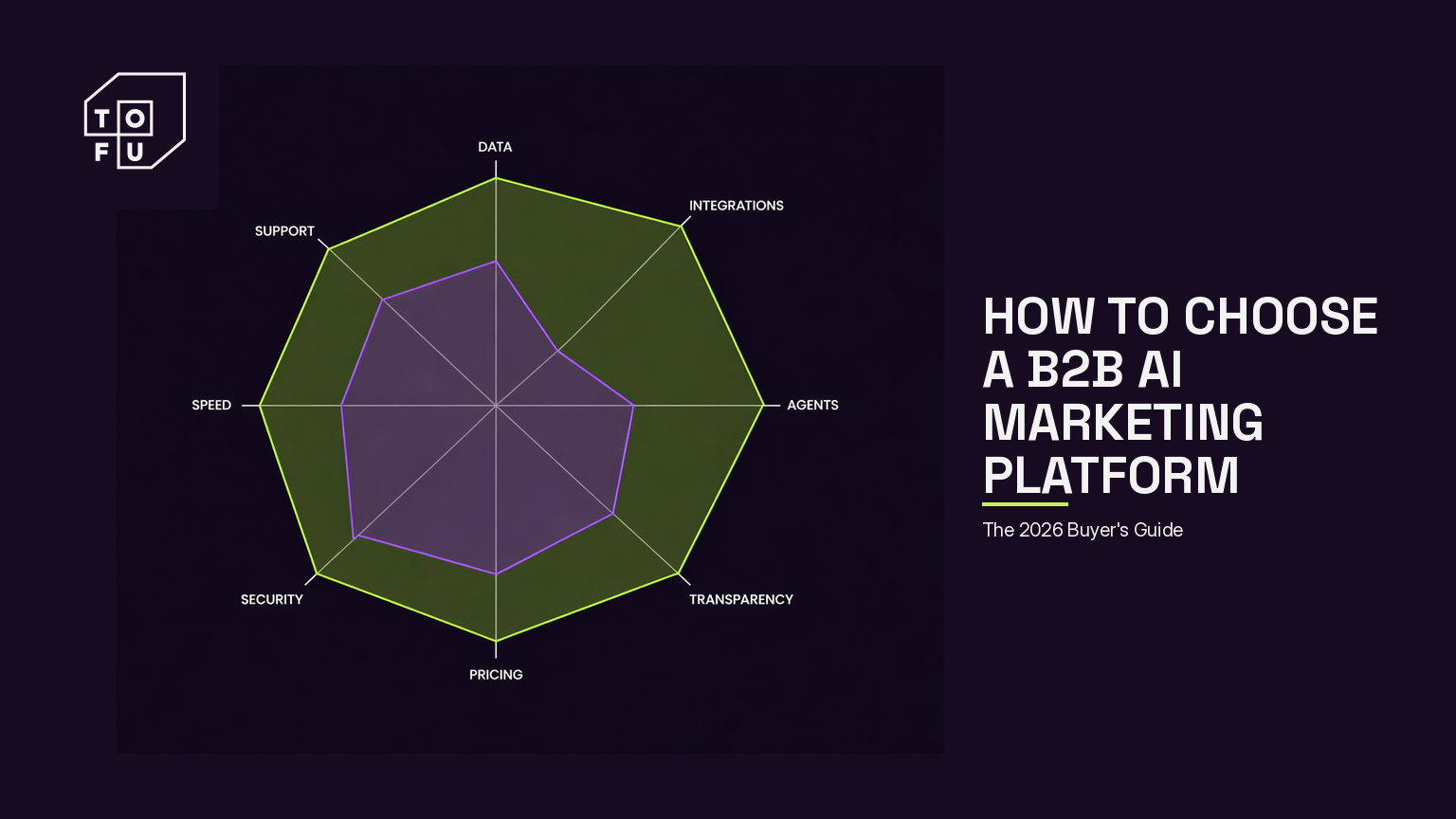
How to Choose a B2B AI Marketing Platform: The 2026 Buyer's Guide
A structured 8-criteria framework for evaluating B2B AI marketing platforms, with a comparison of 8 leading tools.
Best AI Tools for Personalized Outbound at Scale in 2026
Compare 10 AI tools for personalized outbound at scale, from CRM-powered content platforms to cold email and data enrichment solutions.

How to Integrate AI Marketing Personalization into Your Campaigns
A step-by-step guide to integrating AI marketing personalization into B2B campaigns, covering platform evaluation, a 6-step implementation process, tools like Tofu, Dynamic Yield, and Braze, and measurable results from leading teams.
.png)
Hyper Personalization in B2B Marketing: AI Campaigns at Scale
A comprehensive guide to hyper-personalization in B2B marketing, covering the definition, how AI enables 1:1 campaigns at scale, tool evaluation criteria, implementation steps, and real results from teams using platforms like Tofu.
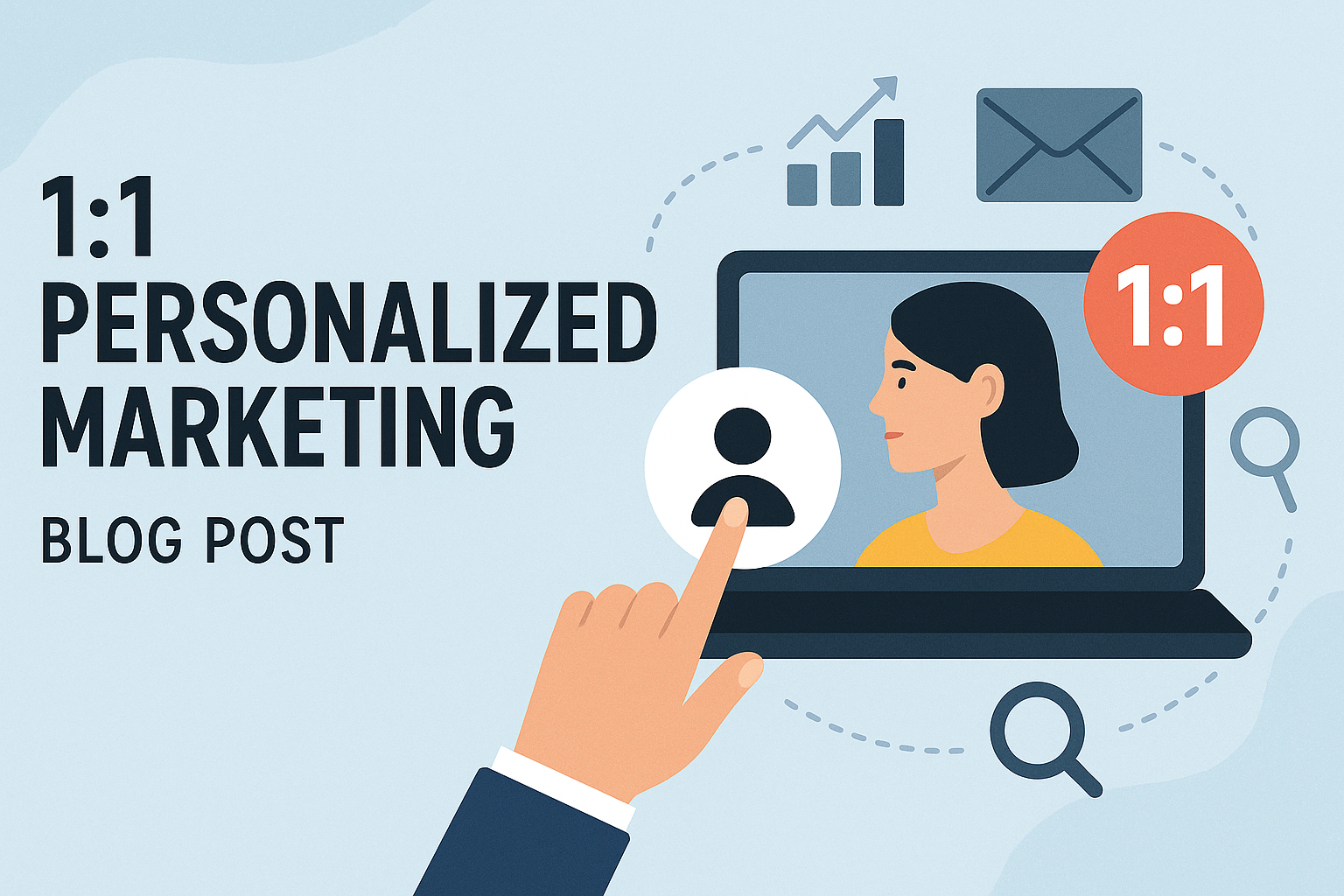
Best Tools for 1:1 ABM Campaigns in 2026
Compare the 9 best AI tools for 1:1 ABM campaigns in 2026, including Tofu, Mutiny, Demandbase, 6sense, Warmly, UserLed, Jasper, Copy.ai, and ChatGPT. Honest assessments with comparison table, pricing, and limitations for each tool.
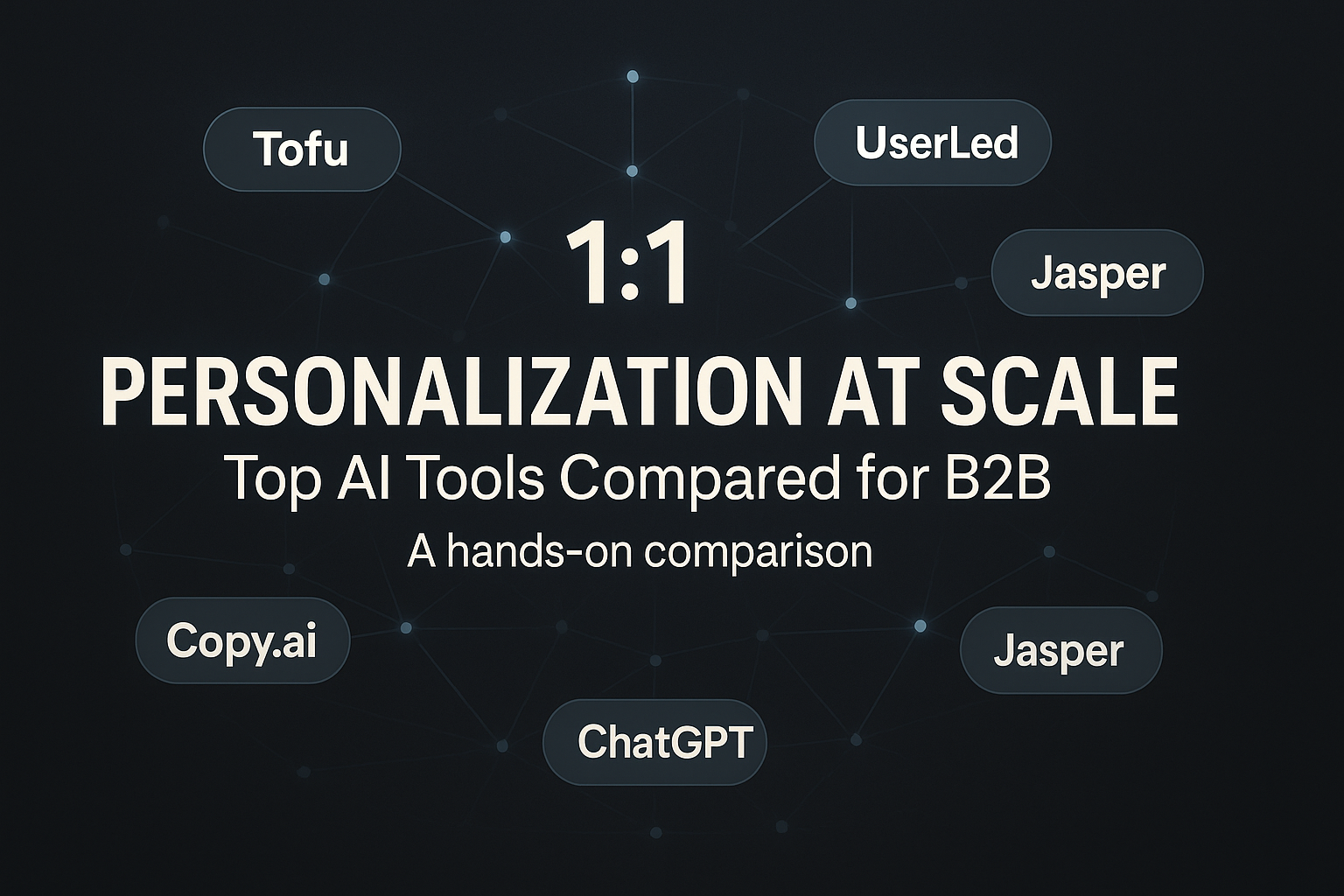
Personalization at Scale: Top AI Tool Compared for B2B Marketers
A comparison of the top AI tools for B2B personalization at scale, including Tofu, Mutiny, UserLed, Jasper, Copy.ai, and ChatGPT, evaluated on personalization depth, automation, and CRM integrations.
Want to give tofu A try?
Request a custom demo to see how Tofu can supercharge your GTM efforts.
ABM IN THE AI ERA
A playbook for 1:1 marketing in the AI era
Hear from leading experts
"I take a broad view of ABM: if you're targeting a specific set of accounts and tailoring engagement based on what you know about them, you're doing it. But most teams are stuck in the old loop: Sales hands Marketing a list, Marketing runs ads, and any response is treated as intent."

"ABM has always been just good marketing. It starts with clarity on your ICP and ends with driving revenue. But the way we get from A to B has changed dramatically."
.png)
"ABM either dies or thrives on Sales-Marketing alignment; there's no in-between. When Marketing runs plays on specific accounts or contacts and Sales isn't doing complementary outreach, the whole thing falls short."

"In our research at 6sense, few marketers view ABM as critical to hitting revenue goals this year. But that's not because ABM doesn't work; it's because most teams haven't implemented it well."
"To me, ABM isn't a campaign; it's a go-to-market operating model. It starts with cross-functional planning: mapping revenue targets, territories, and board priorities."

"With AI, we can personalize not just by account, but by segment, by buying group, and even by individual. That level of precision just wasn't possible a few years ago."
%201%20(1).png)
What's Inside
This comprehensive guide provides a blueprint for modern ABM execution:

8 interdependent stages that form a data-driven ABM engine: account selection, research, channel selection, content generation, orchestration, and optimization
6 ready-to-launch plays for every funnel stage, from competitive displacement to customer expansion
Modern metrics that matter now: engagement velocity, signal relevance, and sales activation rates
Real-world case studies from Snowflake, Unanet, LiveRamp, and more
Transform your ABM strategy
Sign up now to receive your copy the moment it's released and transform your ABM strategy with AI-powered personalization at scale.
Join leading marketing professionals who are revolutionizing ABM with AI