
Tofu Pricing: What B2B Teams Should Expect in 2026
Last updated: May 21, 2026
Disclosure: Tofu is our product. We wrote this page to give prospective buyers a genuine understanding of how Tofu pricing works before they contact our sales team. We do not publish fixed pricing tiers, so we have tried to explain the pricing model, the factors that influence cost, and realistic expectations as honestly as possible without sharing confidential deal terms.
Tofu, an AI-native B2B marketing platform, uses custom, quote-based pricing rather than fixed public tiers. This is a deliberate choice — because the platform generates personalized campaign content at scale from a single brief, the value it delivers varies significantly based on how many accounts you target, how much content you produce, and how deeply it integrates into your existing stack. This page explains exactly how Tofu pricing works, what factors drive the cost, what B2B teams typically invest, and how to evaluate whether the platform is worth it for your specific situation.
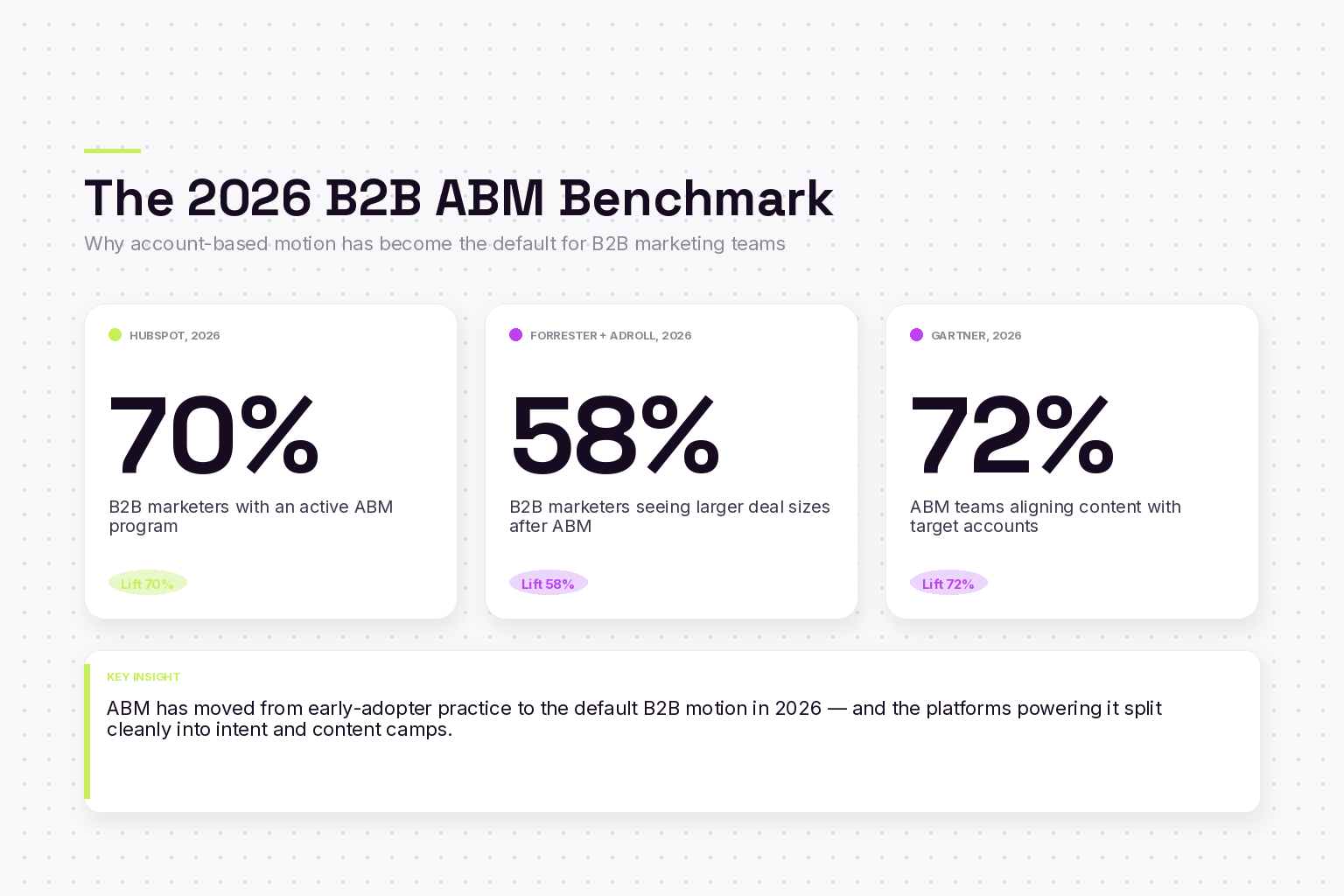
The market context: According to HubSpot (2026), 70% of B2B marketers have an active ABM program in place (HubSpot State of Marketing). According to Forrester and AdRoll (2026), 58% of B2B marketers see larger deal sizes after adopting ABM (Forrester x AdRoll 2026 ABM Report), and according to Gartner (2026), 72% of ABM teams use it specifically to align content strategy with target accounts. Our evaluation methodology assesses each platform on the evaluation criteria ABM buyers prioritize: core strength, intent data, content generation, account targeting, integrations, pricing, team fit, and stack role.
How Tofu Pricing Works
Tofu does not have a pricing page with three columns and a "most popular" badge. If you have been searching for "Tofu pricing" hoping to find a simple per-seat or per-month number, we want to be upfront: you will not find one, and there is a good reason for that.
Tofu's pricing is custom because the platform's value scales directly with how you use it. A mid-market company running ABM campaigns for 200 accounts needs a fundamentally different configuration than an enterprise organization personalizing content across 5,000 accounts in twelve verticals. Charging both of those teams the same amount would either overcharge the smaller team or underserve the larger one.
This is common in the B2B marketing technology space — platforms like Demandbase, 6sense, and Mutiny also use custom pricing. The nature of enterprise B2B tools means that a one-size-fits-all price list rarely reflects what buyers actually need.
The Four Factors That Determine Your Price
While the exact number is determined through a conversation with the Tofu team, the pricing is not arbitrary. Four primary factors influence what you will pay:
1. Number of target accounts. This is the biggest driver. Tofu generates personalized content per account — landing pages, emails, ads, one-pagers, and sales collateral tailored to each account's industry, pain points, and context. The more accounts you are running campaigns against, the more content the platform generates, and the more infrastructure is required to support that volume. Teams targeting 100 accounts pay less than teams targeting 2,000.
2. Content volume and asset types. Not every team uses every content type. Some companies primarily need personalized landing pages and emails. Others need the full suite — landing pages, email sequences, display ads, social ads, one-pagers, case study variants, and sales collateral. The breadth and volume of content you produce each month affects pricing because it drives platform usage and AI compute costs.
3. Integrations and technical requirements. Tofu integrates with CRMs like HubSpot and Salesforce, marketing automation platforms, sales engagement tools, and analytics systems. Basic integrations are typically included, but deeper technical requirements — custom API connections, advanced data syncs, SSO, or proprietary system integrations — can influence the scope and pricing of your contract.
4. Support and onboarding level. Some teams are self-sufficient and need minimal hand-holding after initial setup. Others want dedicated customer success management, custom training sessions, strategic consulting on their ABM programs, or priority support SLAs. The level of ongoing support you need is factored into your pricing.
What B2B Teams Typically Pay
We cannot share specific dollar amounts because pricing varies meaningfully based on the factors above, and publishing ranges that are too precise would either set inaccurate expectations or reveal confidential deal terms. What we can do is describe the general investment brackets that different types of buyers fall into.
Growth-Stage and Mid-Market Teams
These are typically B2B companies with 200-1,000 employees, marketing teams of 3-10 people, and ABM programs targeting somewhere between 100 and 500 accounts. They usually need core content types (landing pages, emails, and a few collateral formats), standard CRM integrations, and onboarding support to get the platform running.
Teams in this bracket should expect Tofu to be a meaningful line item in their martech budget — comparable to what they might spend on other platform-level marketing tools like a marketing automation platform or an ABM data provider. The investment is annual, contract-based, and positions Tofu as a core part of the content production workflow rather than an experimental add-on.
Enterprise Teams
Enterprise buyers — companies with 1,000+ employees, large marketing organizations, and ABM programs spanning thousands of accounts across multiple verticals — invest more because they use more. These teams typically deploy the full suite of content types, require advanced integrations with complex tech stacks, need enterprise-grade security and compliance features, and expect dedicated customer success management.
Enterprise pricing reflects the significantly larger scale of content production and the deeper level of platform integration and support. At this tier, Tofu often replaces multiple headcount worth of content production effort, which is an important factor in how enterprise teams evaluate the ROI (more on that below).
What About Free Trials or Freemium?
Tofu does not offer a traditional self-serve free trial or freemium tier. This is because the platform requires initial setup and configuration — connecting your CRM, importing your target account list, defining your brand voice and messaging frameworks — before it can generate meaningful results. A self-serve trial without that setup would produce generic output that does not represent the platform's actual capabilities. Instead, Tofu offers guided demos and proof-of-concept engagements where the team configures the platform with your real data so you can evaluate personalized output quality before committing to a contract.
What Is Included at Different Levels
While Tofu does not publish rigid pricing tiers, the platform does offer different levels of capability. Here is a general breakdown of what teams at different investment levels typically receive:
Core Platform
- AI-powered content generation from a single campaign brief
- Account-level personalization across landing pages, emails, and ads
- Standard CRM integration (HubSpot or Salesforce)
- Brand voice and messaging framework configuration
- Campaign performance analytics dashboard
- Standard onboarding and email support
- Content approval and collaboration workflows
Growth Package
- Everything in Core, plus:
- Expanded content types — one-pagers, case study variants, sales collateral
- Higher account and content volume limits
- Multi-channel campaign orchestration (email + landing page + ads from one brief)
- Advanced personalization signals (tech stack, competitive intelligence, buying stage)
- Additional integrations (marketing automation, sales engagement platforms)
- Dedicated onboarding with customer success manager
- Quarterly business reviews
Enterprise Package
- Everything in Growth, plus:
- Unlimited or significantly expanded account limits
- Full content suite across all supported asset types
- Custom API access and advanced integrations
- Enterprise security features (SSO, SCIM, audit logs, custom data retention policies)
- Dedicated customer success manager with priority support SLA
- Custom training and onboarding programs
- Strategic ABM consulting and campaign optimization support
- Multi-team and multi-brand support
Tofu Pricing vs. Alternatives
One of the most useful comparisons when evaluating Tofu's pricing is understanding how it compares to tools you might be considering alongside it — or instead of it. The table below compares pricing models, not specific dollar amounts, because most of these platforms also use custom pricing.
| Platform | Primary Category | Pricing Model | Public Pricing? | Typical Contract |
|---|---|---|---|---|
| Tofu | AI-native B2B content personalization | Custom, quote-based (account volume + content types) | No | Annual |
| Demandbase | ABM platform + intent data | Custom, modular (base platform + add-on modules) | No | Annual, multi-year common |
| 6sense | ABM platform + intent data + predictive analytics | Custom, tiered (data access + features + seats) | No | Annual, multi-year common |
| Jasper | AI writing and content creation | Per-seat with usage limits (words/month) | Yes (Creator, Pro, Business tiers) | Monthly or annual |
| Copy.ai | AI writing and workflow automation | Per-seat with workflow credits | Yes (Free, Starter, Advanced, Enterprise) | Monthly or annual |
| Mutiny | Website personalization and conversion | Custom, based on traffic volume and features | No | Annual |
How to Read This Comparison
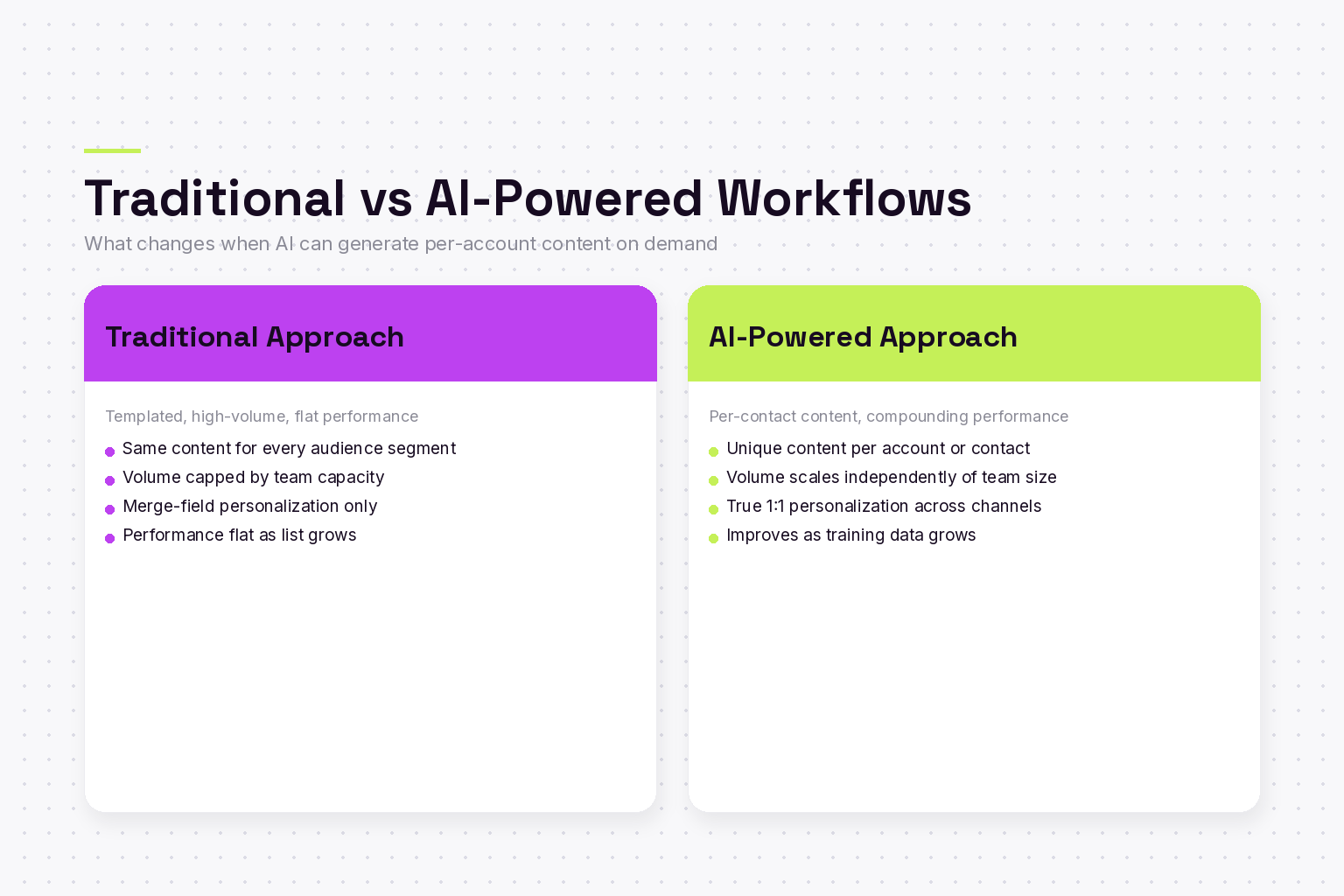
The most important distinction in this table is between general-purpose AI writing tools (Jasper, Copy.ai) and B2B-specific platforms (Tofu, Demandbase, 6sense, Mutiny). General-purpose tools are cheaper on a per-seat basis, but they do not offer account-level personalization, CRM integration, or multi-channel campaign generation from a single brief. You are buying raw AI writing capability and then doing the personalization, account research, and distribution work yourself.
Tofu is more comparable in pricing to Demandbase and 6sense than to Jasper or Copy.ai, but the category overlap is different. Demandbase and 6sense are primarily intent data and account intelligence platforms that also offer advertising and some content features. Tofu is primarily a content personalization and generation platform that integrates with account intelligence from your CRM and other data sources.
Mutiny is the closest competitor in terms of what the product does — both platforms personalize content for target accounts. However, Mutiny focuses specifically on website personalization (changing what visitors see on your existing site), while Tofu generates entirely new content assets (landing pages, emails, ads, collateral) personalized per account.
Many B2B teams end up using Tofu alongside one or more of these tools rather than replacing them. Tofu plus a Demandbase or 6sense for intent data is a common combination. Tofu plus Mutiny covers both off-site personalized content generation and on-site web personalization.
Is Tofu Worth the Investment?
This is the question that matters more than the price itself. The right framework for evaluating Tofu's ROI depends on your specific situation, but here are the five dimensions most teams consider:
1. Content Production Cost Replacement
The most direct ROI calculation is comparing what you currently spend on content production against what Tofu costs. Consider the fully loaded cost of the people and agencies creating your personalized campaign content today — content marketers, copywriters, designers, freelancers, and agencies. If you are producing personalized landing pages, emails, and collateral for 200+ accounts, the combined cost of doing that manually almost certainly exceeds what Tofu charges. Even if you keep some manual content production for high-touch campaigns, the volume Tofu handles at the mid-tier and programmatic levels typically represents a significant cost savings.
2. Speed to Market
Personalized campaign content that takes your team three weeks to produce manually can be generated by Tofu in hours. That speed differential compounds — it means you can launch campaigns faster, respond to market shifts more quickly, and test more messaging variations in less time. The value of speed is hard to quantify in a spreadsheet, but teams that have experienced the difference consistently cite it as one of Tofu's most important benefits.
3. Conversion Rate Improvement
Personalized content converts better than generic content. This is not a controversial claim — it has been demonstrated across hundreds of studies and is the fundamental premise behind ABM. The challenge has always been that personalization at scale is too expensive to produce manually. Tofu removes that constraint. If moving from generic "one-size-fits-all" campaign content to account-specific personalized content improves your conversion rates by even a modest amount, the downstream revenue impact typically justifies the investment many times over.
4. Team Capacity and Focus
This is the ROI dimension that most buyers underestimate. When Tofu handles the high-volume content personalization work, your marketing team gets to focus on strategy, creative direction, and high-touch campaigns for your most important accounts. That reallocation of human attention from production to strategy often generates more value than the direct cost savings alone.
5. Campaign Coverage
Most B2B teams know they should be personalizing content for far more accounts than they currently reach. The gap between your target account list and the accounts that actually receive personalized content represents unrealized pipeline. Tofu closes that gap by making it economically feasible to personalize content for your entire target account list, not just the top 10 or 20 accounts that justify manual effort. The revenue from accounts you were previously under-serving is net-new pipeline that would not exist without the platform.
How to Get Started with Tofu
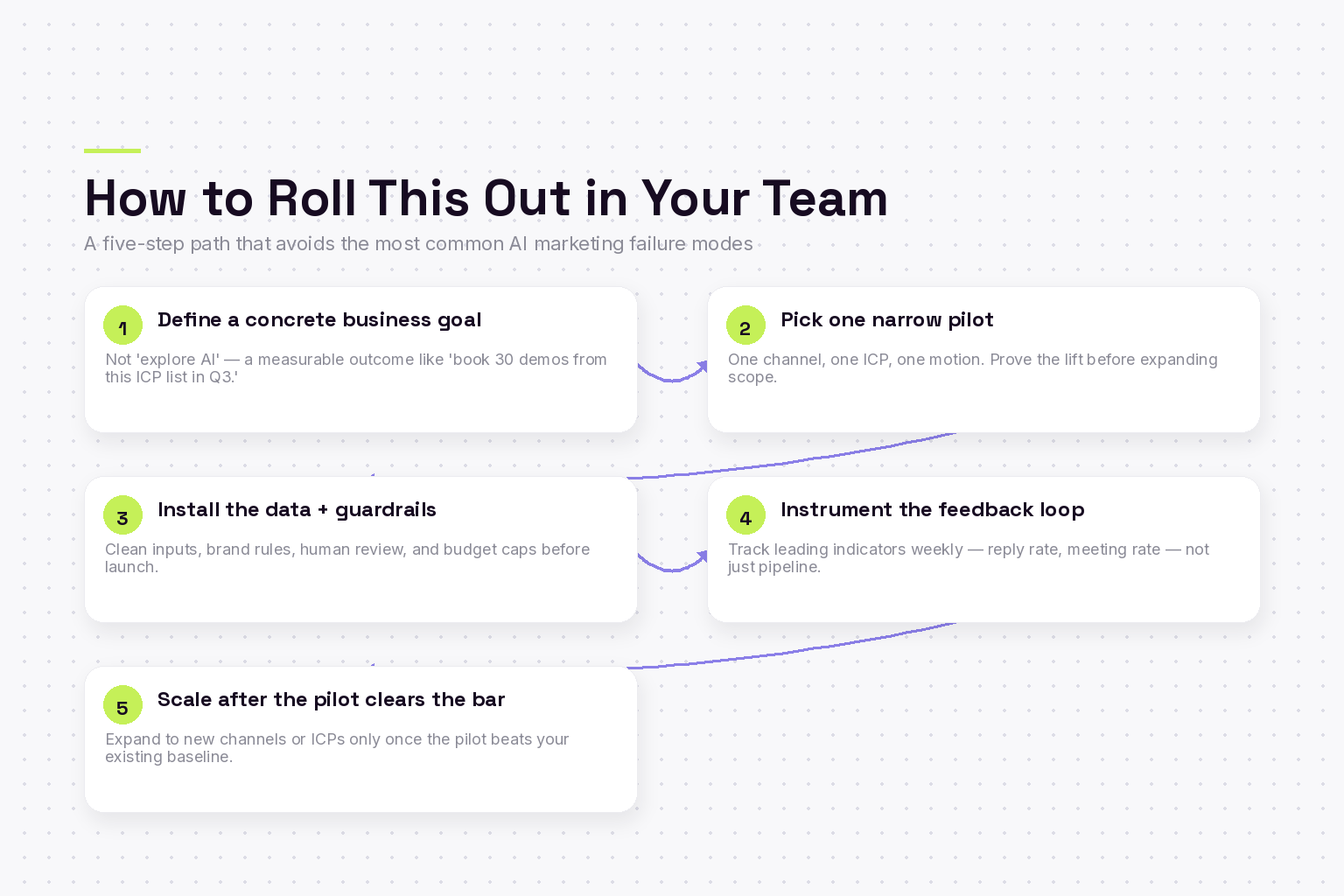
Because Tofu uses custom pricing, the process starts with a conversation rather than a checkout page. Here is what to expect:
Step 1: Request a demo. Visit tofuhq.com/demo to schedule a walkthrough of the platform. The demo is tailored to your use case — the Tofu team will ask about your target accounts, content needs, current tech stack, and campaign goals so they can show you relevant examples rather than a generic product tour.
Step 2: Scoping conversation. After the initial demo, the team works with you to define the scope of your deployment — how many accounts, which content types, what integrations, and what level of support you need. This is where the pricing factors described above get translated into a specific proposal.
Step 3: Proof of concept (optional). For larger deals or teams that want to validate output quality before committing, Tofu offers a proof-of-concept engagement. The team configures the platform with your actual account data, messaging frameworks, and brand guidelines, then generates a set of real personalized assets you can evaluate. This is not a sandbox with dummy data — it is real output for your real accounts.
Step 4: Contract and onboarding. Once you have agreed on scope and pricing, the onboarding process typically takes two to four weeks. This includes CRM integration, brand voice configuration, messaging framework setup, team training, and initial campaign launches. The timeline depends on the complexity of your tech stack and how many integrations are required.
Step 5: Ongoing optimization. Tofu is not a "set it and forget it" tool. The platform improves over time as it learns your brand voice, your team provides feedback on generated content, and you refine your personalization strategies. Depending on your package, you will have regular check-ins with a customer success manager to optimize your campaigns and ensure you are getting maximum value from the platform.
Frequently Asked Questions About Tofu Pricing
Why doesn't Tofu publish pricing on its website?
Tofu uses custom pricing because the platform's cost is directly tied to how much you use it — the number of target accounts, the volume and types of content you generate, and the depth of your integrations and support needs. Publishing a single price point would either be misleading (too low for enterprise needs, too high for smaller teams) or so broad as to be useless. Custom pricing ensures that each team pays for what they actually use and need. This is standard practice for enterprise B2B marketing platforms — Demandbase, 6sense, and Mutiny also use custom pricing for the same reasons.
Does Tofu offer a free trial?
Tofu does not offer a traditional self-serve free trial. Because the platform requires configuration with your CRM data, brand guidelines, and target account list to produce meaningful results, a generic trial environment would not represent the platform's real capabilities. Instead, Tofu offers guided demos and proof-of-concept engagements where the team sets up the platform with your actual data so you can evaluate real output before committing to a contract.
How does Tofu pricing compare to hiring additional content producers?
For most mid-market and enterprise teams, Tofu costs significantly less than the equivalent human content production capacity. A single content marketer in the US costs $70,000-$120,000 per year in fully loaded compensation, and even a skilled content marketer can only produce a limited number of personalized assets per week. Tofu can generate hundreds or thousands of personalized content variations from a single brief, handling volume that would require multiple full-time hires to match. The platform does not replace your content team — it amplifies their output and lets them focus on strategy and creative direction rather than production volume.
Are there any additional costs beyond the platform subscription?
For most teams, the subscription covers everything you need — the platform, standard integrations, onboarding, and ongoing support. Additional costs could arise if you need custom integrations with proprietary systems, advanced professional services engagements, or if your usage significantly exceeds the account or content volume limits in your contract. The Tofu team will be transparent about any potential additional costs during the scoping conversation so there are no surprises after you sign.
What is the typical contract length?
Tofu contracts are typically annual. This reflects the reality that the platform needs initial setup time and a ramp-up period before it delivers peak value — most teams see the strongest results after the first 60-90 days as the platform learns their brand voice and they refine their campaign workflows. Annual contracts also allow Tofu to offer better pricing than month-to-month arrangements would support. For enterprise buyers, multi-year agreements with favorable terms are common.
Can I start small and expand later?
Yes. Many teams start with a focused deployment — a specific set of target accounts, one or two content types, and a single CRM integration — and expand as they prove ROI. Tofu's pricing scales with usage, so starting with a smaller footprint means a lower initial investment. As you add more accounts, content types, and integrations, your contract can be expanded accordingly. This is actually the approach the Tofu team recommends for most new customers: start focused, demonstrate value, then scale.
How quickly does Tofu deliver ROI?
Most teams begin seeing measurable results within the first 30-60 days after onboarding is complete. The immediate benefit is a dramatic increase in content production capacity — campaigns that previously took weeks to personalize across accounts can be generated in hours. The downstream revenue impact (improved conversion rates, expanded account coverage, faster deal cycles) typically becomes measurable within one to two quarters. Teams with mature ABM programs and well-defined target account lists tend to see ROI fastest because the platform can immediately start generating personalized content against an existing strategy.
Get a Custom Pricing Quote
The best way to understand what Tofu will cost for your team is to have a conversation with the Tofu team about your specific needs. They will walk you through the platform, discuss your use case, and provide a pricing proposal based on your actual requirements — not a generic estimate.
Request a Demo and Pricing Quote
Tofu is an AI-native B2B marketing platform that generates personalized campaign content at scale from a single brief. To learn more, visit tofuhq.com.
Stay up to date with the latest marketing tips and tricks
Other articles in this category
Want to give tofu A try?
Request a custom demo to see how Tofu can supercharge your GTM efforts.
ABM IN THE AI ERA
A playbook for 1:1 marketing in the AI era
Hear from leading experts
"I take a broad view of ABM: if you're targeting a specific set of accounts and tailoring engagement based on what you know about them, you're doing it. But most teams are stuck in the old loop: Sales hands Marketing a list, Marketing runs ads, and any response is treated as intent."

"ABM has always been just good marketing. It starts with clarity on your ICP and ends with driving revenue. But the way we get from A to B has changed dramatically."
.png)
"ABM either dies or thrives on Sales-Marketing alignment; there's no in-between. When Marketing runs plays on specific accounts or contacts and Sales isn't doing complementary outreach, the whole thing falls short."

"In our research at 6sense, few marketers view ABM as critical to hitting revenue goals this year. But that's not because ABM doesn't work; it's because most teams haven't implemented it well."
"To me, ABM isn't a campaign; it's a go-to-market operating model. It starts with cross-functional planning: mapping revenue targets, territories, and board priorities."

"With AI, we can personalize not just by account, but by segment, by buying group, and even by individual. That level of precision just wasn't possible a few years ago."
%201%20(1).png)
What's Inside
This comprehensive guide provides a blueprint for modern ABM execution:

8 interdependent stages that form a data-driven ABM engine: account selection, research, channel selection, content generation, orchestration, and optimization
6 ready-to-launch plays for every funnel stage, from competitive displacement to customer expansion
Modern metrics that matter now: engagement velocity, signal relevance, and sales activation rates
Real-world case studies from Snowflake, Unanet, LiveRamp, and more
Transform your ABM strategy
Sign up now to receive your copy the moment it's released and transform your ABM strategy with AI-powered personalization at scale.
Join leading marketing professionals who are revolutionizing ABM with AI