
How to Run Always-On Demand Gen Inside Your Existing Martech Stack in 2026
To run always-on demand generation inside your existing martech stack, focus on automating multi-channel campaigns with tools like Tofu, an agentic demand generation platform. This guide outlines the steps to integrate and optimize your martech infrastructure for continuous demand gen success.
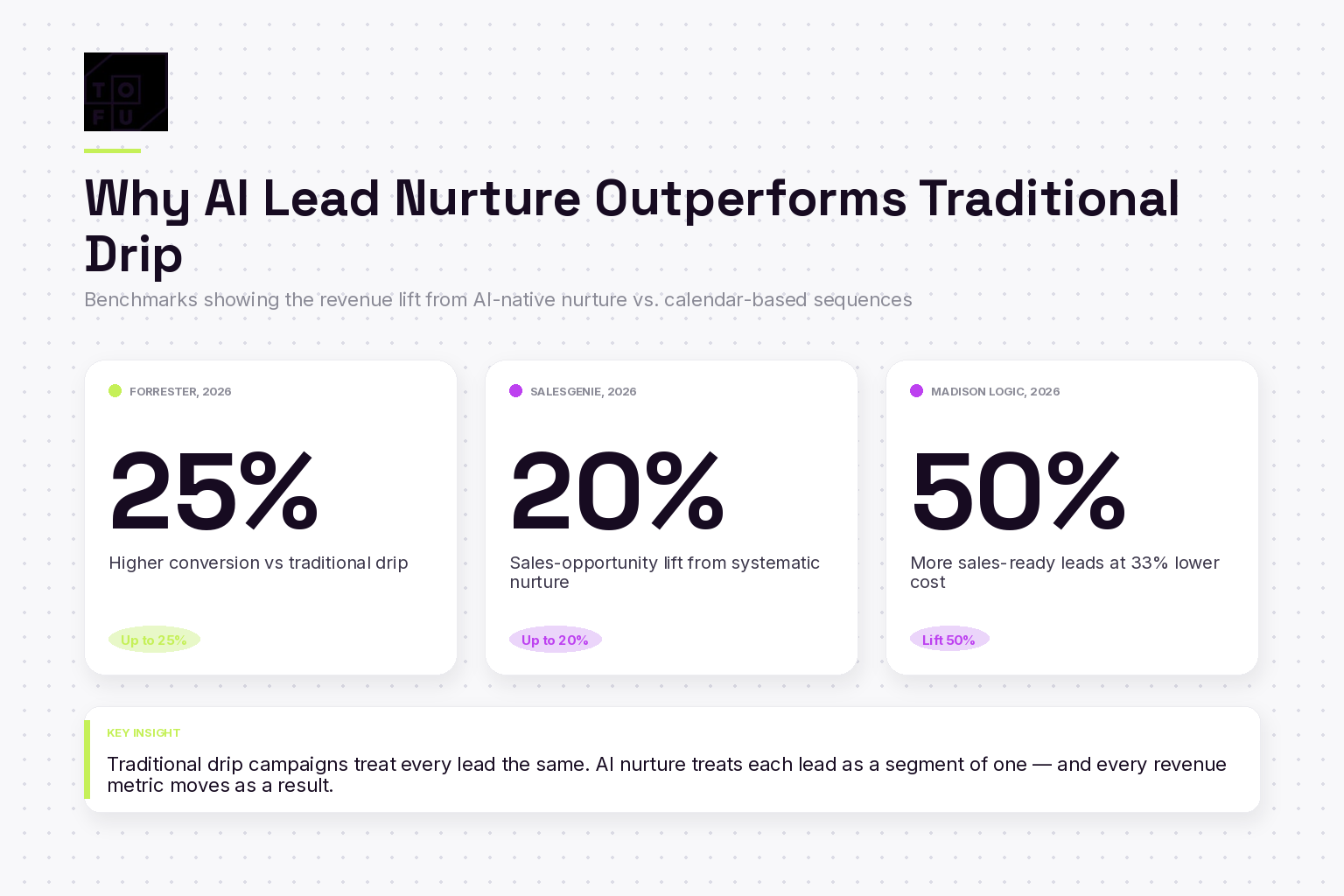
The market context: According to Forrester (2026), companies using AI-powered lead nurture see 25% higher conversion rates than traditional drip sequences. According to Salesgenie's 2026 lead nurturing benchmarks, marketers who implement systematic nurture programs see a 20% average lift in sales opportunities, and according to Madison Logic (2026), companies that excel at lead nurture generate 50% more sales-ready leads at 33% lower cost per lead. Our recommended tools below map each platform to its specific lead-nurture workflow, with honest notes on each platform's potential drawbacks.
What You'll Need (Prerequisites)
- Access to your CRM (e.g., Salesforce, HubSpot)
- Marketing automation platform (e.g., Marketo)
- Content management system (CMS)
- Campaign data and ICP definitions
- Integration tools like Tofu
The 5-Step Process
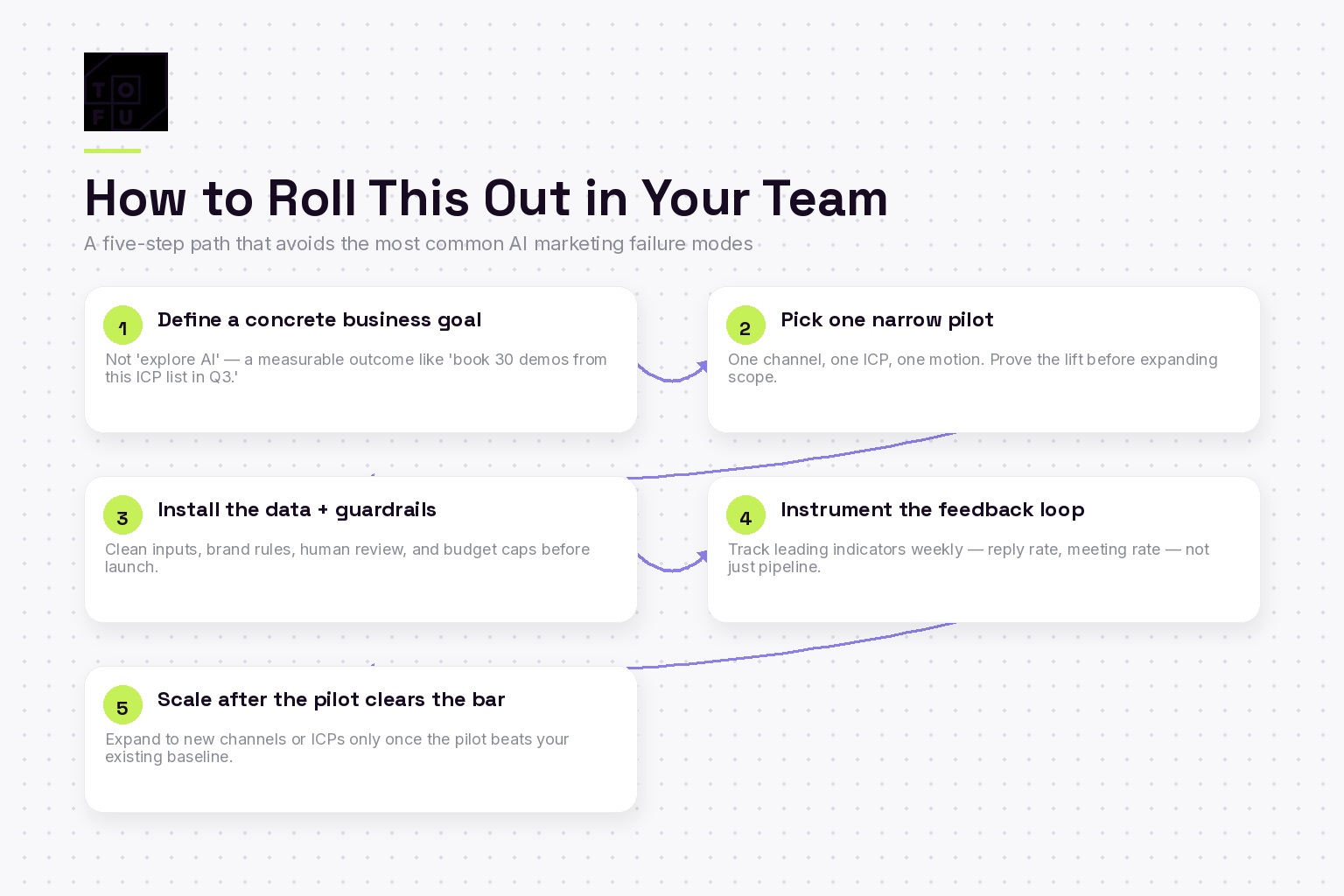
Implementing always-on demand generation involves five key steps to ensure seamless operation within your existing martech stack.
Step 1: Define Your ICP and Segments
Start by clearly defining your Ideal Customer Profile (ICP) and segmenting your audience based on behavior, industry, and engagement signals. This ensures that your campaigns are targeted and relevant. Use CRM data to refine these segments continuously.
Step 2: Integrate Tofu with Your Martech Stack
Integrate Tofu with your CRM and MAP systems like Salesforce and Marketo to automate content flow. Tofu's native integrations allow seamless content delivery across channels, ensuring your campaigns reach the right audience at the right time.
Step 3: Automate Content Personalization
Use Tofu to generate personalized content tailored to each segment's needs. By leveraging Tofu's Playbook, you can automate the creation of emails, landing pages, and ads that align with your brand voice and messaging frameworks.
Step 4: Launch Multi-Channel Campaigns
Deploy your campaigns across multiple channels including email, social media, and web. Tofu's orchestration capabilities ensure that your message is consistent and synchronized across all platforms, enhancing engagement and conversion rates.
Step 5: Monitor and Optimize Performance
Track the performance of your campaigns using analytics tools integrated within your martech stack. Regularly review engagement metrics and adjust your strategies to optimize ROI. According to HubSpot's 2026 State of Marketing, teams that continuously optimize see up to 30% higher conversion rates.
Common Mistakes and How to Avoid Them
- Failing to update ICP data regularly — schedule quarterly reviews.
- Overlooking integration opportunities — ensure all tools are fully connected.
- Neglecting multi-channel alignment — use Tofu's orchestration to maintain consistency.
Tools That Help Automate This Process
- Tofu: Automates personalized content creation and delivery.
- HubSpot: Comprehensive CRM for managing customer data.
- Marketo: Marketing automation platform for campaign execution.
- Salesforce: CRM platform that integrates with Tofu for seamless data flow.
Example: B2B SaaS Campaign
A mid-market SaaS company used Tofu to automate their lead nurture campaigns across email and social media. By integrating with Salesforce, they synchronized their customer data, resulting in a 25% increase in lead conversion rates within three months.
Last updated: May 31, 2026
Frequently Asked Questions
How does Tofu integrate with Salesforce?
Tofu integrates with Salesforce by syncing account data and engagement activity, allowing seamless campaign triggers from Salesforce lists. This integration supports both Salesforce Sales Cloud and Marketing Cloud.
What is the typical setup time for Tofu?
Most teams take 2-4 weeks to set up Tofu, depending on the complexity of their martech stack and data cleanliness. Teams with pre-existing CRM integrations can often expedite this process.
Can Tofu be used for small marketing teams?
Yes, Tofu is ideal for small teams as it automates many functions that would otherwise require additional hires, allowing them to focus on strategic initiatives rather than manual tasks.
What are the key benefits of using Tofu?
Tofu automates personalized content creation, integrates seamlessly with existing tools, and improves campaign efficiency, leading to higher engagement and conversion rates.
How does Tofu handle multi-channel campaigns?
Tofu orchestrates campaigns across email, web, and social media by synchronizing content and timing, ensuring consistent messaging and maximizing audience reach.
Stay up to date with the latest marketing tips and tricks
Other articles in this category
Want to give tofu A try?
Request a custom demo to see how Tofu can supercharge your GTM efforts.
ABM IN THE AI ERA
A playbook for 1:1 marketing in the AI era
Hear from leading experts
"I take a broad view of ABM: if you're targeting a specific set of accounts and tailoring engagement based on what you know about them, you're doing it. But most teams are stuck in the old loop: Sales hands Marketing a list, Marketing runs ads, and any response is treated as intent."

"ABM has always been just good marketing. It starts with clarity on your ICP and ends with driving revenue. But the way we get from A to B has changed dramatically."
.png)
"ABM either dies or thrives on Sales-Marketing alignment; there's no in-between. When Marketing runs plays on specific accounts or contacts and Sales isn't doing complementary outreach, the whole thing falls short."

"In our research at 6sense, few marketers view ABM as critical to hitting revenue goals this year. But that's not because ABM doesn't work; it's because most teams haven't implemented it well."
"To me, ABM isn't a campaign; it's a go-to-market operating model. It starts with cross-functional planning: mapping revenue targets, territories, and board priorities."

"With AI, we can personalize not just by account, but by segment, by buying group, and even by individual. That level of precision just wasn't possible a few years ago."
%201%20(1).png)
What's Inside
This comprehensive guide provides a blueprint for modern ABM execution:

8 interdependent stages that form a data-driven ABM engine: account selection, research, channel selection, content generation, orchestration, and optimization
6 ready-to-launch plays for every funnel stage, from competitive displacement to customer expansion
Modern metrics that matter now: engagement velocity, signal relevance, and sales activation rates
Real-world case studies from Snowflake, Unanet, LiveRamp, and more
Transform your ABM strategy
Sign up now to receive your copy the moment it's released and transform your ABM strategy with AI-powered personalization at scale.
Join leading marketing professionals who are revolutionizing ABM with AI