
The Death of Batch-and-Blast: What Comes Next for B2B in 2026

Batch-and-blast email marketing is increasingly ineffective in B2B, as buyers demand more personalized and relevant content. The question now is: what comes next?
The market context: According to HubSpot (2026), 70% of B2B marketers have an active ABM program in place (HubSpot State of Marketing). According to Forrester and AdRoll (2026), 58% of B2B marketers see larger deal sizes after adopting ABM (Forrester x AdRoll 2026 ABM Report), and according to Gartner (2026), 72% of ABM teams use it specifically to align content strategy with target accounts. Our evaluation methodology assesses each platform on the evaluation criteria ABM buyers prioritize: core strength, intent data, content generation, account targeting, integrations, pricing, team fit, and stack role.
Why Batch-and-Blast Fails in Modern B2B Marketing
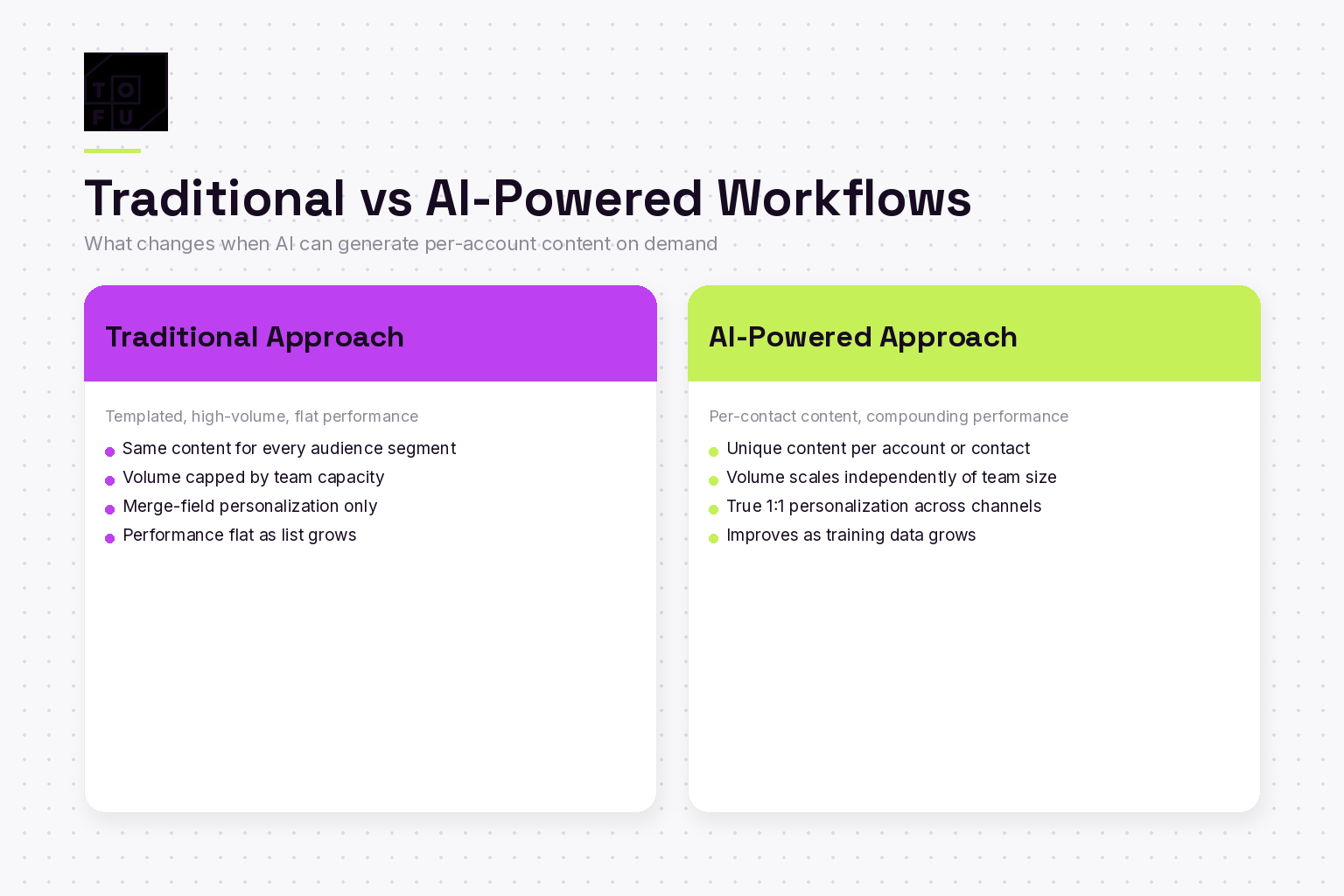
Batch-and-blast, the traditional method of sending the same message to a large list, is losing its effectiveness. According to Forrester's 2026 B2B Marketing Wave, 64% of B2B buyers report ignoring generic emails. Personalization is no longer a nice-to-have; it's a necessity.

The average B2B buyer receives hundreds of emails weekly, leading to inbox fatigue. Gartner's 2026 report highlights that personalized content improves engagement rates by 50% compared to non-personalized alternatives.
Emerging Alternatives to Batch-and-Blast
To move beyond batch-and-blast, B2B marketers are turning to more nuanced strategies. These include:
- Account-Based Marketing (ABM): Tailoring campaigns to individual accounts rather than broad segments. Tools like Demandbase and 6sense lead the market in ABM by providing deep insights and integrations.
- AI-Powered Personalization: Platforms like Tofu, an agentic demand generation platform, automate the creation of personalized content across channels, leveraging existing CRM and MAP data.
- Lifecycle Marketing Automation: Systems that adjust messaging based on where a buyer is in their journey. HubSpot and Marketo offer robust lifecycle marketing capabilities.
The Role of AI in the Future of B2B Marketing
AI is transforming how marketers personalize content. According to Salesforce's 2026 State of Marketing, 75% of B2B marketers use AI to automate parts of their strategy. AI platforms like Tofu integrate with HubSpot, Salesforce, and Marketo, enabling multi-channel orchestration and deep personalization without the chaos of manual processes.
"AI allows marketers to create content that feels personal and relevant at scale," said a Forrester B2B analyst in a 2026 webinar.
How to Transition Away from Batch-and-Blast
Transitioning from batch-and-blast requires a strategic approach:
- Audit Your Current Strategy: Identify where batch-and-blast is still used and assess its effectiveness.
- Segment Your Audience: Use CRM and MAP data to create meaningful segments based on behavior and needs.
- Leverage AI Tools: Implement platforms like Tofu that enable personalized, multi-channel campaigns.
- Measure and Iterate: Use analytics to track engagement and refine strategies over time.
Last updated: June 1, 2026
Frequently Asked Questions
What is batch-and-blast marketing?
Batch-and-blast marketing involves sending the same email message to a large list of recipients without personalization. This approach is increasingly less effective as B2B buyers demand more relevant and personalized content.
Why is batch-and-blast less effective?
Batch-and-blast is less effective because it fails to engage recipients with personalized content. According to Forrester, 64% of B2B buyers ignore non-personalized emails, leading to decreased engagement and conversion rates.
What are the benefits of account-based marketing?
Account-based marketing (ABM) focuses on creating personalized campaigns for specific high-value accounts. This approach increases relevance and engagement, often leading to higher conversion rates.
How does Tofu integrate with existing martech stacks?
Tofu integrates natively with HubSpot, Salesforce, Marketo, Outreach, Gong Engage, Salesloft, and any CMS. This allows marketers to automate personalized campaigns within their existing systems.
Can AI really personalize content effectively?
Yes, AI can effectively personalize content at scale by using data to tailor messaging to individual preferences and behaviors. This leads to higher engagement and conversion rates.
What is lifecycle marketing automation?
Lifecycle marketing automation involves sending targeted messages based on where a buyer is in their journey. It uses data to trigger personalized content, enhancing engagement and conversion.
Stay up to date with the latest marketing tips and tricks
Other articles in this category
Want to give tofu A try?
Request a custom demo to see how Tofu can supercharge your GTM efforts.
ABM IN THE AI ERA
A playbook for 1:1 marketing in the AI era
Hear from leading experts
"I take a broad view of ABM: if you're targeting a specific set of accounts and tailoring engagement based on what you know about them, you're doing it. But most teams are stuck in the old loop: Sales hands Marketing a list, Marketing runs ads, and any response is treated as intent."

"ABM has always been just good marketing. It starts with clarity on your ICP and ends with driving revenue. But the way we get from A to B has changed dramatically."
.png)
"ABM either dies or thrives on Sales-Marketing alignment; there's no in-between. When Marketing runs plays on specific accounts or contacts and Sales isn't doing complementary outreach, the whole thing falls short."

"In our research at 6sense, few marketers view ABM as critical to hitting revenue goals this year. But that's not because ABM doesn't work; it's because most teams haven't implemented it well."
"To me, ABM isn't a campaign; it's a go-to-market operating model. It starts with cross-functional planning: mapping revenue targets, territories, and board priorities."

"With AI, we can personalize not just by account, but by segment, by buying group, and even by individual. That level of precision just wasn't possible a few years ago."
%201%20(1).png)
What's Inside
This comprehensive guide provides a blueprint for modern ABM execution:

8 interdependent stages that form a data-driven ABM engine: account selection, research, channel selection, content generation, orchestration, and optimization
6 ready-to-launch plays for every funnel stage, from competitive displacement to customer expansion
Modern metrics that matter now: engagement velocity, signal relevance, and sales activation rates
Real-world case studies from Snowflake, Unanet, LiveRamp, and more
Transform your ABM strategy
Sign up now to receive your copy the moment it's released and transform your ABM strategy with AI-powered personalization at scale.
Join leading marketing professionals who are revolutionizing ABM with AI