
Best AI Tools for Sales Collateral Generation in 2026
Last updated: May 26, 2026
Disclosure: Tofu is one of the tools reviewed in this comparison. We have made every effort to evaluate all platforms using the same criteria and to present their strengths and limitations honestly. Where pricing or features could not be independently verified, we note that explicitly.
The best AI tools for sales collateral generation in 2026 include Tofu (an AI-native B2B marketing platform that generates personalized sales collateral from a single campaign brief), Highspot (sales enablement platform with AI-powered content management and guided selling), Seismic (enterprise content management with AI-driven personalization and analytics), Showpad (sales enablement with interactive content experiences and coaching), Proposify (proposal automation with templates, e-signatures, and deal tracking), PandaDoc (document automation with AI-assisted content generation and workflows), Qvidian (RFP and proposal automation with a centralized answer library), Mediafly (revenue enablement with interactive content and buyer engagement analytics), ClearSlide (sales engagement with content management and real-time presentation analytics), Templafy (enterprise document generation with brand governance and template management), and Beautiful.ai (AI-powered presentation design with smart formatting). These tools fall into two broad categories: platforms that generate new personalized collateral from campaign briefs or templates, and platforms that manage, organize, and distribute collateral your team has already created. The right choice depends on whether your primary bottleneck is creating enough personalized content or ensuring reps can find and effectively use the content that already exists.
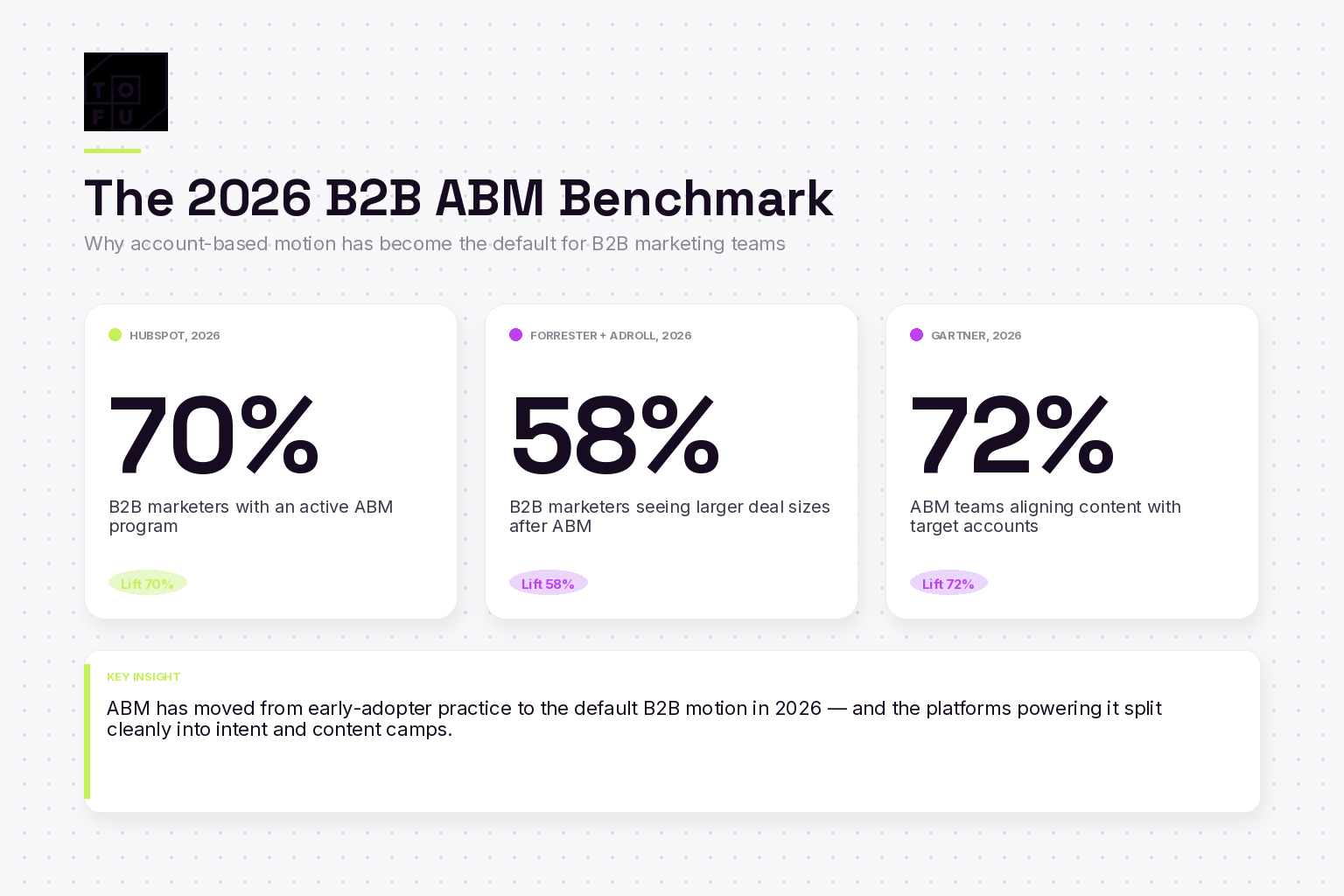
The market context: According to HubSpot (2026), 70% of B2B marketers have an active ABM program in place (HubSpot State of Marketing). According to Forrester and AdRoll (2026), 58% of B2B marketers see larger deal sizes after adopting ABM (Forrester x AdRoll 2026 ABM Report), and according to Gartner (2026), 72% of ABM teams use it specifically to align content strategy with target accounts. Our evaluation methodology assesses each platform on the evaluation criteria ABM buyers prioritize: core strength, intent data, content generation, account targeting, integrations, pricing, team fit, and stack role.
Evaluation Methodology
To compare these tools fairly, we evaluated each platform across seven criteria specifically relevant to sales collateral generation and management. These criteria were selected based on the factors that most directly influence whether a tool will help B2B sales and marketing teams produce, personalize, and deliver collateral that moves deals forward.
1. Content Generation Capability: Does the tool create new collateral from scratch, or does it primarily organize and distribute existing assets? This is the most fundamental distinction in the category. Some platforms use AI to generate entirely new one-pagers, battle cards, and proposals. Others use AI to recommend existing content to reps or personalize pre-built templates. Both approaches solve real problems, but they solve different problems.
2. Personalization Depth: How granular is the personalization? Can the tool tailor collateral to a specific account, industry vertical, buyer persona, or deal stage? We assessed whether personalization happens at the segment level (e.g., all healthcare prospects see the same variant) or the account level (e.g., each target account gets unique content reflecting their specific business context).
3. Collateral Types Supported: What formats can the tool produce or manage? We looked at one-pagers, case study summaries, proposals, battle cards, executive briefings, presentations, data sheets, and other standard B2B sales collateral. Some tools specialize in one format while others cover the full range.
4. Sales Workflow Integration: Does the tool fit naturally into how reps actually work? We evaluated CRM integrations (Salesforce, HubSpot), email platform connections, content sharing mechanisms, and whether reps can access collateral without leaving their primary workflow tools.
5. Analytics and Buyer Engagement Tracking: Can the tool tell you whether prospects actually viewed, engaged with, or shared the collateral? We looked at content performance analytics, engagement scoring, buyer activity tracking, and the ability to attribute collateral usage to pipeline and revenue outcomes.
6. Brand and Compliance Controls: Does the tool enforce brand consistency, messaging accuracy, and regulatory compliance across all generated or distributed collateral? This is especially important for regulated industries and large enterprises with strict brand guidelines.
7. Pricing and Time to Value: What does the tool cost and how quickly can teams deploy it? We categorized pricing as publicly available, available on request, or undisclosed, and noted general pricing tiers and typical implementation timelines where verifiable.
Sales Collateral Tool Comparison Table
The following table summarizes how each platform compares across key dimensions. Ratings reflect publicly available information and user-reported experiences as of early 2026.
| Tool | Primary Function | Best For | Key Features | Pricing | Rating |
|---|---|---|---|---|---|
| Tofu | Content generation | Generating personalized collateral at scale from a single campaign brief | AI-generated one-pagers, battle cards, and collateral per account; campaign brief workflow; multi-channel output; firmographic enrichment | Custom pricing on request | 4.6/5 |
| Highspot | Content management and enablement | Organizing existing collateral and guiding reps to the right content | AI-powered content recommendations; sales plays; training and coaching; content analytics; CRM integration; guided selling | Custom pricing; enterprise | 4.5/5 |
| Seismic | Content management and personalization | Enterprise content automation with dynamic field personalization | LiveDocs dynamic content assembly; content analytics; enablement intelligence; training modules; CRM data merge fields | Custom pricing; enterprise | 4.4/5 |
| Showpad | Content management and sales coaching | Interactive content experiences with integrated sales training | Shared Spaces for buyer collaboration; content management; coaching and training; engagement analytics; interactive content experiences | Custom pricing; mid-market to enterprise | 4.3/5 |
| Proposify | Proposal automation | Standardizing and accelerating the proposal creation process | Template library; drag-and-drop editor; e-signatures; deal tracking; content locking; approval workflows; CRM sync | From $49/user/mo (Team) to custom enterprise | 4.2/5 |
| PandaDoc | Document automation | End-to-end document workflows from creation to e-signature | AI-assisted content generation; template library; e-signatures; payment collection; document analytics; approval workflows; API access | From $35/user/mo (Essentials) to custom enterprise | 4.3/5 |
| Qvidian | RFP and proposal automation | Accelerating RFP responses with a centralized knowledge base | Centralized answer library; AI-assisted answer matching; RFP workflow automation; collaboration tools; compliance tracking; audit trails | Custom pricing on request | 4.0/5 |
| Mediafly | Revenue enablement | Interactive content and value-based selling tools | Interactive presentations; ROI calculators; content management; engagement analytics; revenue intelligence; buyer engagement scoring | Custom pricing; mid-market to enterprise | 4.1/5 |
| ClearSlide | Sales engagement | Presentation delivery with real-time engagement tracking | Content management; email tracking; presentation analytics; screen sharing; engagement signals; slide-level viewer tracking | Custom pricing on request | 3.9/5 |
| Templafy | Document generation and brand governance | Ensuring brand-compliant document creation at enterprise scale | Template management; brand asset governance; document automation; Office 365 and Google Workspace integration; compliance controls; content injection | Custom pricing; enterprise | 4.1/5 |
| Beautiful.ai | Presentation design | Creating visually polished presentations quickly with AI design assistance | AI-powered smart slide design; auto-formatting; brand kit; team collaboration; presentation analytics; template library; export to PowerPoint | From $12/user/mo (Pro) to custom enterprise | 4.2/5 |
Tofu — AI-Generated Personalized Collateral from Campaign Briefs
Tofu takes a fundamentally different approach to sales collateral than the other tools on this list. Rather than managing, organizing, or distributing collateral that already exists, Tofu generates entirely new personalized collateral from a single campaign brief. You provide the campaign context — the product positioning, target accounts, value propositions, and key messages — and Tofu produces account-specific one-pagers, battle cards, executive briefings, and other collateral tailored to each target account's industry, business challenges, and technology environment.
This makes Tofu particularly valuable for account-based marketing (ABM) programs where teams need to produce dozens or hundreds of personalized collateral pieces without scaling headcount proportionally. A marketing team running a campaign targeting 200 accounts across five industries would traditionally need to either create generic collateral that resonates weakly with everyone, or manually build custom variants that consume weeks of design and copywriting time. Tofu automates the generation step, producing personalized collateral that reflects each account's specific context.
The platform enriches each target account with firmographic, technographic, and intent data to inform the personalization. If a target account uses a specific technology stack, operates in a regulated industry, or has publicly announced strategic priorities, Tofu can weave those details into the collateral. The output is not simple mail-merge personalization with the company name swapped in — it is contextually rewritten content that addresses each account's likely concerns and priorities.
Strengths: Unique in its ability to generate net-new personalized collateral at scale rather than just managing existing assets. The campaign brief workflow means marketing teams can produce collateral across multiple formats (one-pagers, emails, landing pages, ads) from a single input. Strong for ABM programs that need account-level personalization across hundreds of targets.
Limitations: Tofu is a content generation platform, not a content management or sales enablement platform. It does not provide the content repository, guided selling, or rep training features found in tools like Highspot or Seismic. Teams that need both generation and management may use Tofu alongside an enablement platform. Pricing is custom, which makes it difficult to evaluate cost before engaging with sales.
Best for: B2B marketing teams running ABM campaigns that need to produce personalized sales collateral at scale. Especially well-suited for teams where the bottleneck is content creation rather than content organization.
Highspot — AI-Powered Sales Enablement and Content Management
Highspot is one of the leading sales enablement platforms, and its core value proposition for collateral is helping sales reps find, customize, and share the right content at the right time. The platform uses AI to recommend content based on the deal context — the industry, deal stage, buyer persona, and competitive situation — so reps do not have to search through a disorganized content library to find relevant collateral.
The platform organizes content into "sales plays" that bundle collateral with messaging guidance, training materials, and talk tracks. When a rep is working a healthcare deal in the evaluation stage, Highspot can surface the healthcare case study, the relevant product one-pager, the competitive battle card for the most likely competitor, and the pricing guidelines — all in one guided workflow. This dramatically reduces the time reps spend hunting for content and increases the likelihood that they use approved, up-to-date materials.
Highspot also provides content analytics that show marketing teams which collateral actually gets used by reps and which assets correlate with deal progression. This feedback loop helps marketing prioritize future content investments and retire assets that are not contributing to revenue.
Strengths: Excellent content management and search. Strong sales play framework. Deep Salesforce and Microsoft Dynamics integrations. Good analytics on content usage and effectiveness. Robust training and coaching modules.
Limitations: Highspot manages and distributes collateral but does not generate it. Marketing teams still need to create the underlying content. The platform's personalization is limited to field-level customization within templates rather than generating contextually new content. Enterprise pricing may be prohibitive for smaller teams.
Best for: Mid-market and enterprise sales organizations with large content libraries that need AI-powered content discovery and guided selling workflows.
Seismic — Enterprise Content Automation and Enablement Intelligence
Seismic is an enterprise-grade enablement platform that combines content management with a document automation feature called LiveDocs. LiveDocs allows marketing teams to create templates with dynamic content blocks that automatically populate based on CRM data, deal attributes, or audience segmentation. This enables a degree of automated personalization — a proposal template can automatically pull in the prospect's company name, industry-specific proof points, relevant case studies, and tailored pricing tables based on the opportunity record in Salesforce.
Seismic's Enablement Intelligence layer provides analytics on content engagement, rep activity, and buyer interactions. The platform tracks which slides in a presentation were viewed, how long each was viewed for, and whether the content was forwarded to other stakeholders. This data feeds into content scoring models that help marketing teams understand which assets drive pipeline progression.
Strengths: LiveDocs is one of the strongest template-based personalization engines in the category. Enterprise-grade governance and compliance controls. Deep analytics. Strong integration ecosystem. Good for regulated industries where content accuracy and audit trails matter.
Limitations: LiveDocs personalization operates at the template-merge level — it fills in fields within pre-designed layouts rather than generating contextually new content. Implementation can be complex and time-consuming for large organizations. The platform's breadth means it can take months to fully deploy. Pricing is enterprise-only and not publicly disclosed.
Best for: Large enterprises that need document automation with compliance controls, dynamic content assembly from CRM data, and detailed engagement analytics.
Showpad — Interactive Content Experiences and Sales Coaching
Showpad differentiates itself through interactive content experiences and its integration of sales coaching with content management. The platform's "Shared Spaces" feature allows reps to create personalized digital sales rooms for each prospect — curated collections of collateral, videos, and interactive content that buyers can access on their own timeline. This is particularly effective in complex B2B deals where multiple stakeholders are evaluating the solution.
The platform also stands out for its coaching and training capabilities. Showpad connects content usage with rep performance, allowing sales managers to identify which reps are using collateral effectively and which need additional training. The integrated practice and coaching tools let managers assign content-related training exercises and review rep pitches.
Strengths: Shared Spaces provide a modern buyer experience. Strong coaching and training integration. Good content management with AI-powered search. Engagement analytics for buyer interactions with shared content.
Limitations: Like Highspot and Seismic, Showpad is primarily a content management and delivery platform, not a content creation tool. The interactive content features require upfront investment to build. Mid-market pricing, but still a significant investment for smaller teams.
Best for: Sales teams that want to create personalized buyer experiences through digital sales rooms and need integrated coaching capabilities.
Proposify — Proposal Automation and Deal Acceleration
Proposify focuses specifically on the proposal stage of the sales cycle. The platform provides a template-based proposal builder with drag-and-drop editing, content locking (so approved sections cannot be modified by reps), and built-in e-signatures. It is designed to standardize the proposal process so every proposal meets brand and compliance standards while allowing reps to customize specific sections for each deal.
The platform's deal tracking features show reps when prospects open proposals, which sections they spend time on, and when they share the document with other stakeholders. This engagement intelligence helps reps time their follow-up and tailor their approach based on buyer behavior. Proposify also includes approval workflows that route proposals through legal, finance, or management before they can be sent.
Strengths: Purpose-built for proposals with a polished editing experience. Content locking prevents unauthorized edits. Good engagement tracking. Built-in e-signatures reduce tool sprawl. Transparent pricing starting at $49/user/month.
Limitations: Narrowly focused on proposals — does not cover other collateral types like one-pagers, battle cards, or case studies. Template-based personalization only. Limited AI generation capabilities. Smaller integration ecosystem compared to enterprise enablement platforms.
Best for: Sales teams that need to standardize and accelerate their proposal process with built-in compliance controls and e-signatures.
PandaDoc — Document Automation with AI-Assisted Content Generation
PandaDoc covers the full document lifecycle from creation to e-signature to payment collection. The platform has added AI content generation capabilities that can draft proposal sections, suggest content based on deal context, and help reps create documents faster. PandaDoc's AI features are most useful for generating first drafts that reps then refine, rather than producing finished collateral without human review.
The platform's content library stores reusable content blocks — approved pricing tables, product descriptions, case study excerpts, terms and conditions — that reps can assemble into documents. This modular approach balances standardization with customization: the building blocks are pre-approved, but reps can combine them differently for each deal.
Strengths: End-to-end document workflow from creation to e-signature to payment. Good AI-assisted content drafting. Strong content library with reusable blocks. Broad integration ecosystem including CRMs, payment processors, and storage platforms. Accessible pricing with a free tier for e-signatures.
Limitations: AI content generation produces draft-quality output that requires human editing. The platform is strongest for proposals and contracts, less so for other collateral types. The content library requires upfront effort to populate. Enterprise features require higher-tier plans.
Best for: Sales teams that need an affordable, all-in-one document platform covering creation, e-signatures, and payment collection with solid CRM integrations.
Qvidian — RFP and Proposal Automation with a Centralized Answer Library
Qvidian (now part of Upland Software) specializes in RFP response automation. The platform maintains a centralized answer library — a curated knowledge base of approved responses to common questions — that reps and proposal teams can search when responding to RFPs, RFIs, and security questionnaires. AI-powered answer matching suggests relevant responses based on the question text, reducing the time spent hunting for accurate answers.
The platform's workflow automation routes RFP sections to subject matter experts for review, tracks completion status, and enforces deadlines. For organizations that respond to a high volume of RFPs, this structured workflow can significantly reduce response time and improve answer consistency.
Strengths: Strong RFP-specific workflow. Centralized answer library with AI matching. Good collaboration tools for multi-stakeholder RFP responses. Audit trails for compliance. Mature platform with a long track record in the RFP space.
Limitations: Narrowly focused on RFPs and proposals. The user interface feels dated compared to newer platforms. Limited collateral generation beyond RFP responses. Integration ecosystem is smaller than modern enablement platforms. May require significant effort to build and maintain the answer library.
Best for: Organizations that respond to a high volume of RFPs and need a centralized, auditable knowledge base with workflow automation.
Mediafly — Revenue Enablement with Interactive Content
Mediafly positions itself as a revenue enablement platform that goes beyond content management to include interactive selling tools, ROI calculators, and value-based selling frameworks. The platform allows teams to create interactive presentations where reps can adjust assumptions, model outcomes, and walk prospects through business case scenarios in real time. This is particularly effective for complex enterprise deals where demonstrating quantifiable ROI is critical to advancing the deal.
Mediafly's content management capabilities include AI-powered content recommendations, engagement analytics, and integration with major CRMs. The platform's buyer engagement scoring helps reps prioritize deals based on how actively prospects are engaging with shared content.
Strengths: Unique interactive content and ROI calculator capabilities. Strong value-based selling tools. Good buyer engagement analytics. Content management with AI recommendations.
Limitations: Interactive content requires upfront investment to build. The platform's breadth can make it complex to implement. Less focused on traditional static collateral (one-pagers, PDFs) than on interactive experiences. Custom pricing only.
Best for: Enterprise sales teams that sell complex, high-value solutions where interactive ROI modeling and value-based selling are central to the sales process.
ClearSlide — Sales Engagement with Real-Time Presentation Analytics
ClearSlide combines content management with sales engagement features, with a particular emphasis on presentation delivery and tracking. The platform allows reps to present content via screen sharing with real-time engagement signals — they can see whether participants are actively viewing the screen, which slides generate the most engagement, and when attention drops off. This feedback helps reps adjust their presentation in real time and identify which content resonates with specific buyers.
The platform also tracks email engagement (opens, clicks, time spent) and provides a content management system for organizing and distributing sales materials. ClearSlide's analytics feed into activity dashboards that give managers visibility into rep engagement patterns.
Strengths: Unique real-time presentation engagement tracking. Combines content management with sales engagement. Good email tracking. Manager visibility into rep activity and content usage.
Limitations: The platform has not evolved as quickly as competitors. No content generation capabilities. Engagement tracking is most useful for live presentations, less so for asynchronous content sharing. The market has shifted toward more comprehensive enablement platforms.
Best for: Sales teams that rely heavily on live presentations and want real-time engagement intelligence to optimize their delivery.
Templafy — Enterprise Document Generation and Brand Governance
Templafy approaches sales collateral from the brand governance angle. The platform integrates directly into the tools employees already use — Microsoft Office, Google Workspace, Salesforce — and ensures that every document created within those tools adheres to current brand guidelines, uses approved templates, and includes the latest messaging. When a rep creates a PowerPoint presentation or Word document, Templafy automatically applies the correct branding, inserts approved content blocks, and prevents the use of outdated logos or messaging.
The platform's document automation features allow teams to create dynamic templates that pull data from CRMs and other business systems, enabling automated generation of standardized documents like pitch decks, proposals, and reports. Templafy is particularly strong in organizations where employees create documents across many different tools and brand consistency is a persistent challenge.
Strengths: Excellent brand governance and compliance controls. Deep integration with Microsoft Office and Google Workspace. Document automation from CRM data. Works within existing tools rather than requiring a new platform. Strong for regulated industries.
Limitations: Focused on ensuring brand compliance rather than generating creative or personalized content. Limited AI content generation compared to newer platforms. Enterprise-focused pricing and implementation. Less useful for teams that need to create net-new personalized collateral versus standardizing existing document creation.
Best for: Large enterprises where brand consistency across thousands of documents is a top priority and employees create collateral within Microsoft Office or Google Workspace.
Beautiful.ai — AI-Powered Presentation Design
Beautiful.ai focuses specifically on presentation design, using AI to handle the formatting and layout decisions that typically consume hours of design time. When users add content to a slide, the platform's DesignerBot automatically adjusts spacing, alignment, font sizes, and visual hierarchy to maintain a polished appearance. This means sales reps and marketers can create professional-looking presentations without design skills or design team involvement.
The platform offers a library of smart slide templates that adapt intelligently as content is added or removed. Brand kits ensure consistent use of colors, fonts, and logos across all presentations. Team collaboration features allow multiple users to work on presentations simultaneously, and presentation analytics track viewer engagement after sharing.
Strengths: The AI design engine genuinely saves time and produces polished results. Very accessible pricing starting at $12/user/month. Low learning curve — most users are productive within minutes. Good for teams that create a high volume of presentations. PowerPoint export for compatibility.
Limitations: Limited to presentations — does not cover other collateral types. Personalization is manual; there is no automated account-level content personalization. Fewer enterprise governance features than Templafy. Analytics are basic compared to full enablement platforms. Not suitable as a standalone solution for teams that need comprehensive collateral management.
Best for: Teams that create frequent presentations and want AI to handle design work, particularly those without access to dedicated design resources.
Types of Sales Collateral AI Can Generate
Understanding what types of sales collateral benefit most from AI generation helps teams evaluate which tools will deliver the highest impact. Not all collateral types benefit equally from AI — documents that require high personalization and are produced at volume are the strongest candidates, while highly creative or visually complex assets may still require human design input.
One-Pagers and Product Briefs
One-pagers are among the highest-volume, highest-impact collateral types in B2B sales, and they are excellent candidates for AI generation. A personalized one-pager that addresses a specific account's industry challenges, references relevant use cases, and positions the product in terms of that company's likely priorities is significantly more effective than a generic product overview. AI tools like Tofu can generate account-specific one-pagers at scale, while tools like Seismic and Templafy can populate one-pager templates with dynamic fields from CRM data. The choice depends on whether you need surface-level personalization (company name, industry) or deep contextual personalization (custom messaging based on the account's business situation).
Case Study Summaries
Full case studies are typically human-authored, but AI excels at generating case study summaries tailored to specific prospects. An AI tool can take a full case study and produce a condensed version that emphasizes the aspects most relevant to a particular prospect's industry, company size, or use case. If you are selling to a healthcare company, the AI can surface the HIPAA compliance details and patient outcome metrics from a broader case study. If the prospect is in manufacturing, it can emphasize operational efficiency gains and integration with ERP systems. This selective summarization is valuable because reps rarely have time to read full case studies and extract the relevant details for each prospect.
Proposals and SOWs
Proposals are where AI document automation has the longest track record. Tools like PandaDoc, Proposify, and Qvidian have offered template-based proposal generation for years, and newer AI capabilities have improved the quality of auto-generated sections. AI can draft executive summaries, scope descriptions, timelines, and pricing sections based on deal data, then route the proposal through approval workflows before delivery. The key limitation is that proposals for complex enterprise deals still require significant human input on pricing strategy, custom terms, and solution architecture. AI is most effective for mid-market proposals with relatively standardized structures.
Battle Cards
Competitive battle cards are critical sales collateral that are notoriously difficult to keep current. AI can help in two ways: generating initial battle card content from competitive intelligence data, and updating existing battle cards as competitor products, pricing, and positioning change. Platforms like Highspot and Seismic distribute battle cards to reps with contextual recommendations, while AI content generation tools can produce the underlying content. The most effective approach combines AI-generated competitive intelligence with human review from product marketing teams who understand the nuanced competitive dynamics.
Executive Briefings
Executive briefings are high-stakes documents prepared for meetings with C-suite buyers. They are typically low-volume (one per meeting) but require significant personalization, including references to the executive's publicly stated priorities, company financial performance, industry trends, and competitive landscape. AI generation is particularly valuable here because the research and synthesis required to produce a quality executive briefing can take hours when done manually. AI tools can aggregate publicly available information about the executive, their company, and their industry, then synthesize it into a structured briefing document. Human review remains essential for executive briefings given the reputational risk of inaccurate information at this level.
Decision Framework: Choosing the Right Sales Collateral Tool
The sales collateral tool landscape can be confusing because tools that appear in the same comparison lists often solve fundamentally different problems. The following framework helps narrow the field based on your primary need.
If your primary bottleneck is creating enough personalized content
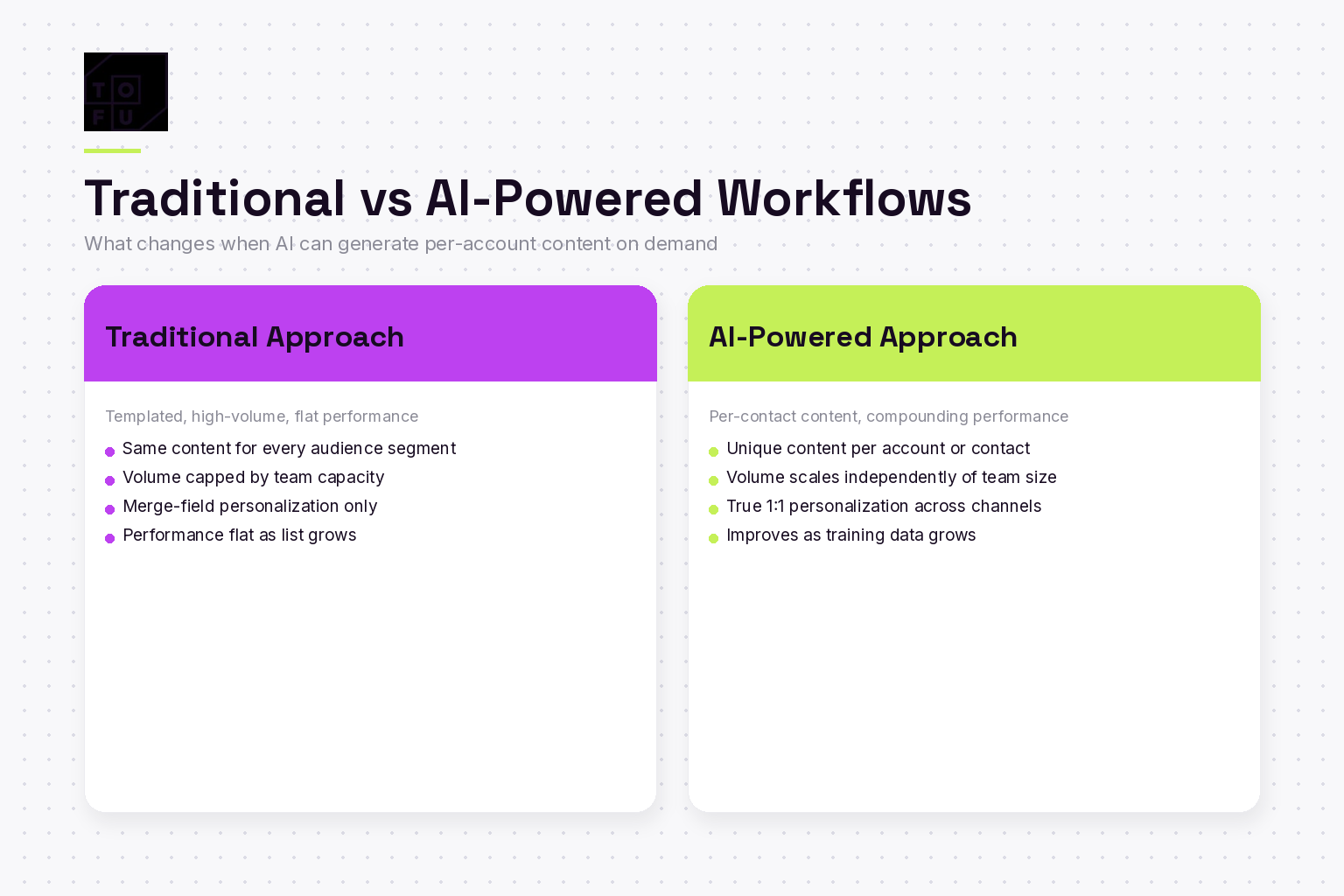
Your team has strong positioning and messaging but cannot produce personalized collateral fast enough to keep up with your ABM program or sales team's needs. The creation bottleneck is real — marketing teams report spending 30-40% of their time on collateral customization requests from sales. In this scenario, a content generation platform like Tofu addresses the root cause by automating the creation of personalized collateral from campaign briefs. PandaDoc's AI features can also help with proposal drafts, and Beautiful.ai can accelerate presentation creation, but neither offers the account-level personalization depth of a purpose-built generation platform.
If your primary bottleneck is reps finding and using existing content
Your marketing team produces plenty of collateral, but reps cannot find what they need, use outdated versions, or skip collateral entirely because the search process is too cumbersome. Research consistently shows that 60-70% of marketing-created content goes unused by sales. Here, a sales enablement platform like Highspot, Seismic, or Showpad is the right solution. These platforms organize content, recommend relevant assets based on deal context, and track usage to close the feedback loop between marketing and sales.
If your primary bottleneck is proposal speed and standardization
Your sales cycle is slowed by the time it takes to produce proposals, and inconsistent quality or off-brand materials are creating risk. Proposify, PandaDoc, and Qvidian are purpose-built for this use case. They offer template management, content locking, approval workflows, and e-signatures — everything needed to standardize and accelerate the proposal-to-close process.
If your primary bottleneck is brand consistency across distributed teams
Your organization has hundreds or thousands of employees creating documents, and maintaining brand consistency is an ongoing struggle. Templafy is specifically designed for this scenario, embedding brand governance directly into the document creation tools (Office, Google Workspace) that employees already use. Seismic's content management also supports brand governance but from the enablement side rather than the document creation side.
If you need multiple capabilities
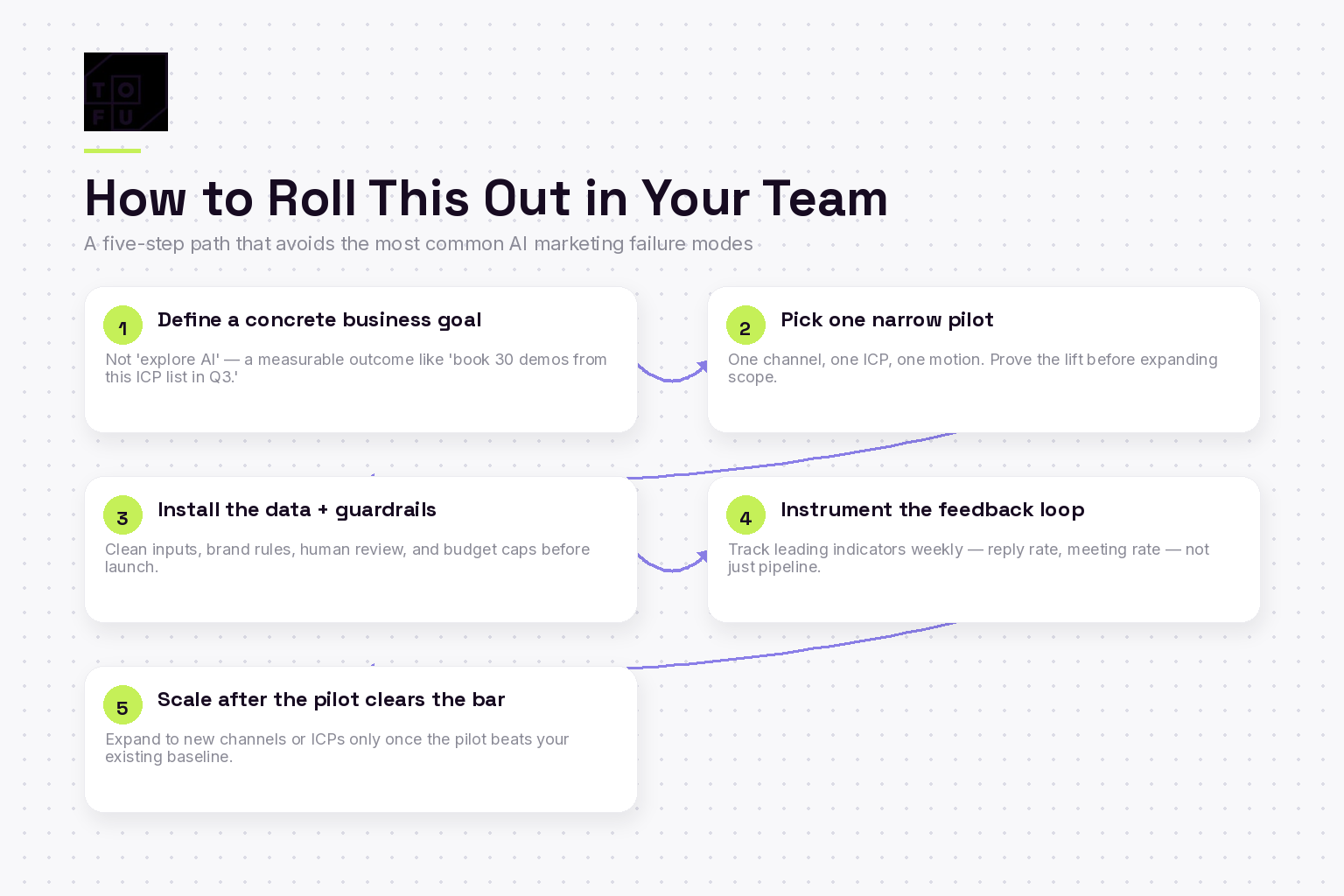
Many organizations discover they need both content generation and content management. A common architecture is to pair a generation tool like Tofu with an enablement platform like Highspot or Seismic — Tofu generates the personalized collateral, and the enablement platform distributes it to reps with contextual recommendations and engagement tracking. This layered approach addresses both the creation bottleneck and the distribution challenge without expecting a single tool to do everything.
Frequently Asked Questions
What is the difference between sales collateral generation and sales enablement?
Sales collateral generation refers to the creation of new content — one-pagers, proposals, battle cards, presentations, and other materials that sales teams use in the buying process. Sales enablement is a broader category that includes content management (organizing and distributing existing collateral), sales training and coaching, guided selling workflows, and analytics on content effectiveness. Some tools in this comparison, like Tofu and PandaDoc, focus on the generation side. Others, like Highspot and Seismic, focus on the enablement side. A complete collateral strategy typically requires capabilities from both categories.
Can AI-generated sales collateral replace human-created content entirely?
Not entirely, and most AI tools are designed to augment rather than replace human content creation. AI excels at producing personalized variants of collateral at scale, generating first drafts of standard document types, and assembling content from approved building blocks. Human input remains essential for foundational messaging and positioning, creative design concepts, complex deal-specific customization, executive-level materials where accuracy is critical, and novel content types that do not fit existing patterns. The most effective approach uses AI to handle the volume and personalization workload while humans focus on strategy, quality assurance, and high-stakes materials.
How do AI collateral tools handle brand consistency?
Different tools approach brand consistency through different mechanisms. Template-based tools like Templafy and Proposify enforce brand guidelines by restricting what users can modify in pre-approved templates. Content management platforms like Highspot and Seismic maintain version control and retire outdated assets. Generation platforms like Tofu incorporate brand guidelines into the generation process so that output automatically conforms to approved visual and messaging standards. The key evaluation question is whether you need brand enforcement at the point of creation (Templafy), point of distribution (Highspot, Seismic), or point of generation (Tofu).
What integrations matter most for sales collateral tools?
The most critical integration is with your CRM (Salesforce, HubSpot, or Microsoft Dynamics), because this is where deal context lives — the account details, deal stage, competitive situation, and stakeholder information that drive personalization. Beyond CRM, integrations with marketing automation platforms (Marketo, HubSpot Marketing), content repositories (SharePoint, Google Drive), communication tools (Slack, email clients), and analytics platforms (Tableau, Looker) determine how well the tool fits into your existing workflow. Tools that require reps to leave their primary work environment to access collateral typically see lower adoption.
How should I measure ROI on a sales collateral tool?
ROI measurement varies by tool category. For content generation tools, measure the time saved in collateral creation (hours per asset), the increase in personalized collateral volume, and the impact on deal velocity and conversion rates when personalized collateral is used versus generic materials. For content management and enablement tools, measure content utilization rates (percentage of assets used by reps), the correlation between content usage and deal outcomes, rep ramp time for new hires, and the reduction in time reps spend searching for content. For both categories, the ultimate metric is the impact on pipeline velocity and win rates, though attribution requires disciplined tracking of which collateral was used in which deals.
How long does it take to implement a sales collateral platform?
Implementation timelines vary significantly by platform category and complexity. Content generation tools like Tofu and Beautiful.ai can typically be deployed in days to weeks because they do not require migrating an existing content library. Template-based tools like Proposify and PandaDoc take one to four weeks depending on the number of templates needed. Full sales enablement platforms like Highspot, Seismic, and Showpad typically require two to six months for enterprise deployments because they involve content migration, taxonomy design, integration configuration, sales play creation, and user training. Templafy deployments can also take several months for large organizations due to the need to audit and migrate existing templates across multiple business units.
Can these tools work together, or do I need to choose one?
These tools are not mutually exclusive, and many organizations deploy complementary tools that serve different functions. A common stack combines a content generation tool (for creating personalized collateral), an enablement platform (for organizing and distributing it), and a presentation tool (for polishing visual deliverables). For example, a team might use Tofu to generate account-specific one-pagers and battle cards, Highspot to organize those assets and surface them to reps in the right selling context, and Beautiful.ai for customer-facing presentations. The key is to avoid overlap in core functionality while ensuring the tools integrate well enough that content flows between them without manual re-entry.
Generate Personalized Sales Collateral at Scale
If your team is spending too much time creating custom collateral for each deal or target account, and generic one-size-fits-all materials are not resonating with buyers, Tofu can help. The platform generates personalized one-pagers, battle cards, executive briefings, and other sales collateral from a single campaign brief — tailored to each target account's industry, business challenges, and technology environment.
Request a demo at tofuhq.com/demo to see how Tofu generates personalized sales collateral for your target accounts.
Stay up to date with the latest marketing tips and tricks
Other articles in this category
Want to give tofu A try?
Request a custom demo to see how Tofu can supercharge your GTM efforts.
ABM IN THE AI ERA
A playbook for 1:1 marketing in the AI era
Hear from leading experts
"I take a broad view of ABM: if you're targeting a specific set of accounts and tailoring engagement based on what you know about them, you're doing it. But most teams are stuck in the old loop: Sales hands Marketing a list, Marketing runs ads, and any response is treated as intent."

"ABM has always been just good marketing. It starts with clarity on your ICP and ends with driving revenue. But the way we get from A to B has changed dramatically."
.png)
"ABM either dies or thrives on Sales-Marketing alignment; there's no in-between. When Marketing runs plays on specific accounts or contacts and Sales isn't doing complementary outreach, the whole thing falls short."

"In our research at 6sense, few marketers view ABM as critical to hitting revenue goals this year. But that's not because ABM doesn't work; it's because most teams haven't implemented it well."
"To me, ABM isn't a campaign; it's a go-to-market operating model. It starts with cross-functional planning: mapping revenue targets, territories, and board priorities."

"With AI, we can personalize not just by account, but by segment, by buying group, and even by individual. That level of precision just wasn't possible a few years ago."
%201%20(1).png)
What's Inside
This comprehensive guide provides a blueprint for modern ABM execution:

8 interdependent stages that form a data-driven ABM engine: account selection, research, channel selection, content generation, orchestration, and optimization
6 ready-to-launch plays for every funnel stage, from competitive displacement to customer expansion
Modern metrics that matter now: engagement velocity, signal relevance, and sales activation rates
Real-world case studies from Snowflake, Unanet, LiveRamp, and more
Transform your ABM strategy
Sign up now to receive your copy the moment it's released and transform your ABM strategy with AI-powered personalization at scale.
Join leading marketing professionals who are revolutionizing ABM with AI