
Best AI Tools for B2B Sales Acceleration in 2026
Last updated: May 4, 2026
Disclosure: Tofu is one of the tools listed in this comparison. We built this guide to be genuinely useful for B2B revenue teams evaluating their options, and every tool — including ours — is assessed using the same criteria. Where Tofu is not the best fit for a use case, we say so.
The best AI tools for B2B sales acceleration in 2026 are Outreach, Gong, Apollo.io, Salesloft, Clari, Chorus (ZoomInfo), People.ai, Drift (now part of Salesloft), Highspot, Seismic, 6sense, and Tofu — an AI-native B2B marketing platform that generates personalized sales collateral at scale. These platforms collectively cover the full sales acceleration stack: conversation intelligence, pipeline forecasting, sales engagement sequencing, buyer intent detection, content management, and personalized collateral generation. According to McKinsey's 2026 analysis, B2B organizations using AI across their sales process report 15-20% increases in pipeline generation and 10-15% improvements in close rates. The difference between top-performing and average sales teams is increasingly defined not by headcount or effort, but by which AI tools they deploy and how those tools integrate into their revenue workflow.
The market context: According to HubSpot (2026), 70% of B2B marketers have an active ABM program in place (HubSpot State of Marketing). According to Forrester and AdRoll (2026), 58% of B2B marketers see larger deal sizes after adopting ABM (Forrester x AdRoll 2026 ABM Report), and according to Gartner (2026), 72% of ABM teams use it specifically to align content strategy with target accounts. Our evaluation methodology assesses each platform on the evaluation criteria ABM buyers prioritize: core strength, intent data, content generation, account targeting, integrations, pricing, team fit, and stack role.
What Sales Acceleration Means in 2026
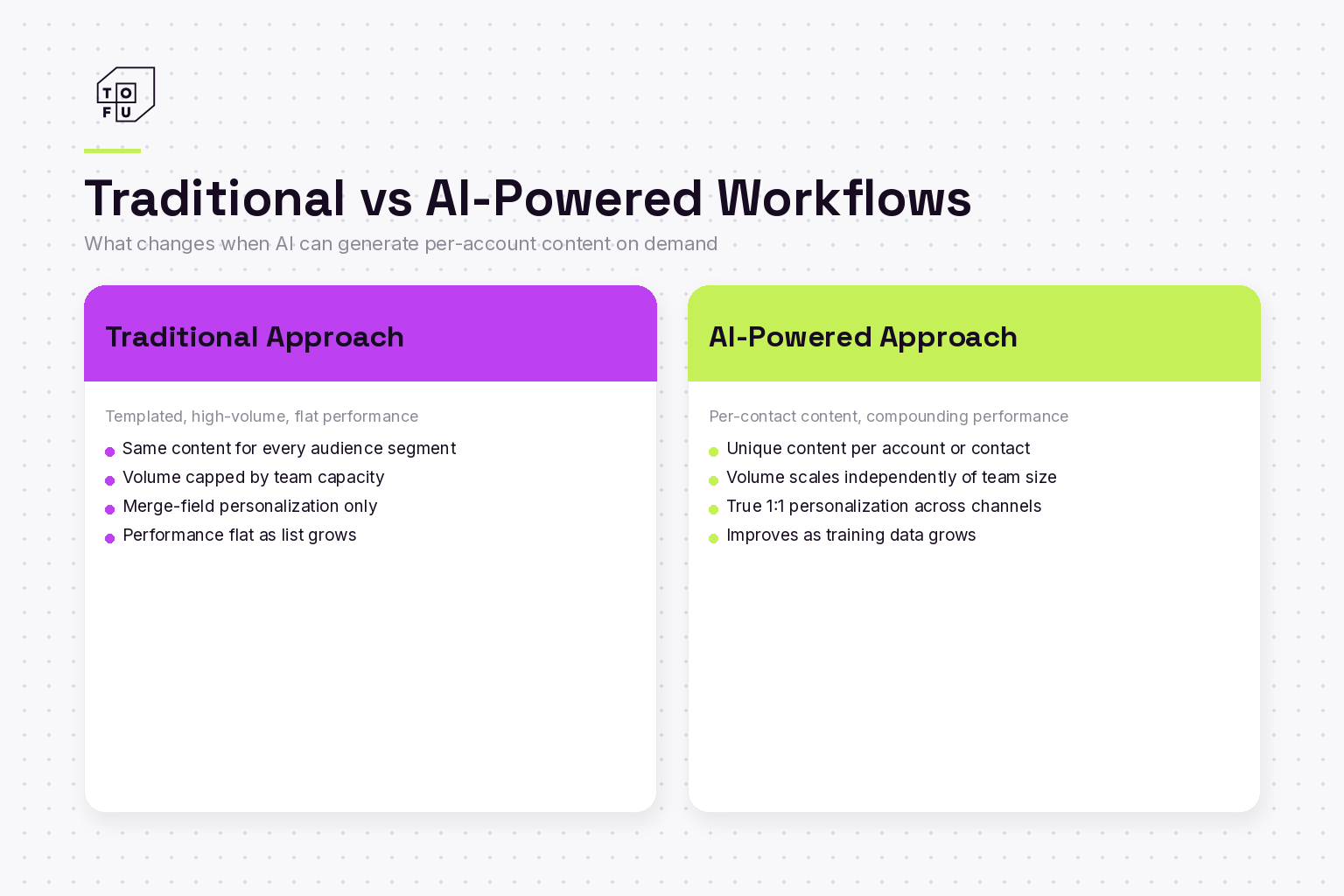
Sales acceleration is the practice of using technology, data, and process optimization to compress the B2B sales cycle — moving deals from first touch to closed-won faster and with higher conversion rates. In 2026, this definition has expanded significantly. Traditional sales acceleration focused on automating manual tasks: dialing, emailing, scheduling. Modern sales acceleration is intelligence-driven. AI now analyzes buyer behavior in real time, predicts which deals will close, identifies which prospects to prioritize, coaches reps during live conversations, and generates the personalized content that moves deals forward.

The sales acceleration technology stack has fragmented into distinct functional categories, each powered by AI. Sales engagement platforms (Outreach, Salesloft) automate multi-channel outreach sequences. Conversation intelligence (Gong, Chorus) records, transcribes, and analyzes sales calls to surface coaching insights and deal risks. Revenue intelligence and forecasting (Clari, People.ai) aggregate activity data to predict pipeline outcomes. Buyer intent platforms (6sense) identify accounts showing purchase signals before they fill out a form. Sales content and enablement (Highspot, Seismic) manage and deliver the right content to the right rep at the right moment. And personalized content generation (Tofu) creates account-specific collateral — landing pages, one-pagers, emails, and ads — at the scale that enterprise sales teams require.
The challenge for revenue leaders is not whether to adopt AI for sales acceleration — that question has been settled. The challenge is selecting the right combination of tools across these categories and integrating them into a unified workflow. This guide evaluates the leading tools in each category to help you build a sales acceleration stack that fits your team's size, selling motion, and pipeline goals.
The 12 Best AI Tools for B2B Sales Acceleration
| Tool | Best For | Key Features | Pricing | Rating |
|---|---|---|---|---|
| Outreach | Multi-channel sales engagement + AI sequencing | Smart Email Assist, AI-driven sequences, deal forecasting, conversation intelligence (Kaia) | ~$100-$160/user/mo (custom quote) | 4.7/5 |
| Gong | Conversation intelligence + deal analytics | AI call analysis, deal risk scoring, competitive mentions, coaching recommendations, Gong Engage | ~$100-$150/user/mo (custom quote) | 4.8/5 |
| Apollo.io | All-in-one prospecting + outbound engagement | 275M+ contact database, AI email writing, multi-step sequences, intent signals, lead scoring | Free-$119/user/mo + credits | 4.6/5 |
| Salesloft | AI-powered cadences + conversation intelligence | AI Email Agents, Rhythm AI action engine, Drift chatbots (integrated), deal management | ~$125-$200/user/mo (custom quote) | 4.5/5 |
| Clari | Revenue forecasting + pipeline management | AI forecasting, pipeline inspection, deal health scoring, revenue leak detection, CRM auto-capture | Custom pricing (enterprise) | 4.5/5 |
| Chorus (ZoomInfo) | Conversation intelligence within ZoomInfo ecosystem | Call recording + AI analysis, deal intelligence, onboarding acceleration, CRM enrichment | Bundled with ZoomInfo (custom quote) | 4.4/5 |
| People.ai | Revenue intelligence + activity capture | Automated activity capture, AI deal inspection, account engagement scoring, rep productivity analytics | Custom pricing (enterprise) | 4.4/5 |
| Drift (Salesloft AI) | AI chatbots + real-time buyer engagement | AI-powered chat, automated meeting booking, buyer intent scoring, conversational landing pages | $2,500+/mo (bundled with Salesloft) | 4.3/5 |
| Highspot | Sales content management + enablement | AI content recommendations, guided selling, training + coaching, content analytics, digital rooms | Custom pricing (~$40-$75/user/mo est.) | 4.6/5 |
| Seismic | Enterprise sales enablement + content automation | AI content personalization, LiveDocs dynamic content, learning + coaching, enablement analytics | Custom pricing (~$50-$85/user/mo est.) | 4.5/5 |
| 6sense | Buyer intent detection + account prioritization | AI intent data, predictive account scoring, buying stage identification, audience building, orchestration | Custom pricing (starts ~$50K+/yr) | 4.3/5 |
| Tofu | Personalized sales collateral + campaign content at scale | AI-generated landing pages, emails, one-pagers, ads from a single brief, account-level personalization | Custom (contact for quote) | 4.5/5 |
Individual Tool Reviews
1. Outreach
Outreach is the dominant sales engagement platform for mid-market and enterprise B2B organizations, and it has evolved well beyond basic email sequencing. The platform's AI capabilities now span the full engagement workflow: Smart Email Assist generates personalized email drafts based on prospect context and prior interactions, AI-powered sequence optimization recommends the best cadence timing and channel mix, and conversation intelligence (Kaia) analyzes sales calls in real time to surface coaching opportunities. Outreach's deal management features use AI to score deal health based on engagement patterns, stakeholder activity, and historical close data — giving managers visibility into which deals are progressing and which are stalling.
Where Outreach excels is in consolidating the sales engagement workflow into a single platform. Reps manage multi-channel sequences — email, phone, LinkedIn, SMS — from one interface, and AI optimizes each step based on aggregate performance data. The platform's analytics surface which sequences, templates, and reps perform best, enabling continuous optimization. The trade-offs: Outreach does not generate personalized collateral like landing pages or one-pagers, pricing is opaque and toward the higher end of the market with minimum seat commitments, and the platform's complexity demands dedicated RevOps support to configure and maintain effectively.
Best for: Mid-market and enterprise sales teams running structured multi-channel outbound sequences that need AI-optimized engagement workflows with built-in analytics and deal management.
2. Gong
Gong is the market leader in conversation intelligence, and its AI capabilities have expanded into a comprehensive revenue intelligence platform. At its core, Gong records, transcribes, and analyzes every customer interaction — calls, video meetings, emails — to extract actionable insights. The AI identifies deal risks before they become visible in CRM data: declining stakeholder engagement, competitor mentions, pricing objections, and missing next steps. Gong's coaching features analyze top-performer behavior patterns and surface specific, data-backed recommendations for each rep based on their actual conversation habits.
Gong Engage, launched in 2025, extended Gong's capabilities from analysis into action. Reps can now execute multi-channel outreach sequences directly from Gong, with AI using conversation intelligence data to inform the content and timing of follow-ups. The platform's deal board provides a pipeline view enriched by conversation data, not just CRM field updates. Gong's primary limitation is pricing — it is among the most expensive tools in the sales acceleration stack, and ROI is most pronounced for organizations with significant call and meeting volume. Teams that primarily sell through email or chat will extract less value.
Best for: Sales organizations where phone calls and video meetings are a primary selling motion and leadership needs data-driven coaching insights, deal risk detection, and revenue forecasting grounded in actual buyer conversations.
3. Apollo.io
Apollo.io has become the go-to all-in-one sales acceleration platform for startups, SMBs, and growth-stage companies that want prospecting data, engagement tools, and AI in a single platform at accessible pricing. Apollo's database includes over 275 million contacts and 73 million companies, with AI-powered lead scoring that identifies the prospects most likely to convert. The platform's AI writing capabilities generate personalized emails and subject lines based on prospect data, and multi-step sequences orchestrate outreach across email, phone, and LinkedIn. Intent data integration shows which accounts are actively researching relevant topics.
Apollo's competitive advantage is value density. Where competitors like Outreach and Salesloft require separate data providers (ZoomInfo, Lusha) for contact information, Apollo bundles this into the platform. The free tier is genuinely useful — 10,000 email credits per month, basic sequences, and limited intent data. The trade-off is depth: Apollo's conversation intelligence, deal management, and analytics are functional but less sophisticated than purpose-built alternatives like Gong or Clari. Data accuracy still requires verification for critical outbound campaigns, and enterprise organizations with complex selling motions typically outgrow Apollo's deal management capabilities.
Best for: Startups and growth-stage B2B companies that need an affordable, all-in-one platform combining prospecting data, AI-powered outbound sequencing, and basic deal management without managing multiple vendor contracts.
4. Salesloft
Salesloft has positioned itself as a comprehensive revenue orchestration platform, integrating sales engagement, conversation intelligence, and deal management into a unified system. The platform's AI Email Agents represent one of the most advanced native AI personalization capabilities in the sales engagement category: an Account Research Agent automatically gathers company context — industry, news, technology stack, competitive landscape — and an Email Personalization Agent uses that research to generate tailored emails for each cadence step. Rhythm AI, Salesloft's prioritization engine, analyzes buyer signals across channels and recommends the highest-impact actions for each rep at any given moment.
The acquisition of Drift in 2024 added real-time buyer engagement capabilities, making Salesloft the only major sales engagement platform that natively combines automated outbound sequences with AI-powered inbound chat. The conversation intelligence layer rounds out the platform's ability to analyze every touchpoint in the buyer journey. Salesloft's limitations mirror Outreach's: pricing is opaque, minimum seat requirements apply, and the platform requires RevOps expertise. The breadth of the product means that no single layer is as deep as a best-of-breed alternative — organizations needing the deepest conversation intelligence may still prefer Gong alongside a simpler engagement tool.
Best for: Revenue teams seeking a unified platform that combines outbound engagement, inbound chat (Drift), conversation intelligence, and deal management with AI-driven prioritization across all buyer interactions.
5. Clari
Clari is the leading revenue forecasting and pipeline management platform, purpose-built for the problem that costs B2B companies the most: inaccurate forecasts and invisible pipeline leaks. Clari's AI ingests data from CRM, email, calendar, calls, and engagement tools to build an independent forecast that does not rely on rep-submitted predictions. The system identifies revenue leak — deals that are slipping, accounts that have gone dark, pipeline that was created but never progressed — and quantifies the gap between current pipeline and revenue targets. For sales leaders, this means a single source of truth for pipeline health that updates automatically based on actual activity patterns rather than subjective rep updates.
Clari's deal inspection capabilities let managers drill into any deal and see an AI-generated health assessment based on engagement signals, stakeholder involvement, and historical comparisons. Mutual action plans reduce deal slippage by aligning buying committees and sales teams on next steps. Clari is not a sales engagement tool — it does not help reps send emails, make calls, or create content. It sits as an intelligence layer on top of tools like Outreach, Salesloft, and Gong. Pricing is enterprise-focused, and the platform's value is strongest for organizations with 50+ reps where forecast accuracy is a board-level concern.
Best for: VP of Sales and CROs at mid-market and enterprise organizations who need AI-powered revenue forecasting, pipeline inspection, and deal health analytics that operate independently of rep-submitted CRM data.
6. Chorus (ZoomInfo)
Chorus, now fully integrated into the ZoomInfo platform, provides conversation intelligence capabilities paired with ZoomInfo's industry-leading B2B contact and company database. The combination is powerful for sales acceleration: ZoomInfo identifies the right accounts and contacts to target, and Chorus analyzes every conversation to ensure those engagements are productive. AI-powered call analysis identifies winning patterns — talk-to-listen ratio, question techniques, objection handling — and surfaces them as coachable moments for individual reps. Deal intelligence features track conversation sentiment across the buying committee, flagging when deals shift from positive to at-risk.
The ZoomInfo integration is Chorus's key differentiator. Sales teams using ZoomInfo for prospecting data get conversation intelligence included in their contract, reducing total cost compared to running Gong alongside a separate data provider. Chorus's onboarding acceleration features are particularly strong — new reps can listen to top-performer calls filtered by deal type, industry, or objection. Standalone, Chorus's conversation intelligence is a step behind Gong's in depth, particularly around deal forecasting accuracy and coaching automation. The ZoomInfo platform contract is substantial, making Chorus less accessible to organizations that only need conversation intelligence without the broader data platform.
Best for: Organizations already using or evaluating ZoomInfo for B2B data that want conversation intelligence and call coaching bundled into their existing data platform contract.
7. People.ai
People.ai approaches sales acceleration from a data and analytics perspective, automatically capturing all revenue team activity — emails sent, meetings held, calls made, contacts engaged — and mapping it to accounts, opportunities, and contacts in the CRM. This automated activity capture eliminates one of the biggest friction points in B2B sales: reps manually logging activities. With complete activity data in the CRM, People.ai's AI generates account engagement scores, identifies whitespace in stakeholder coverage, and highlights deals where activity patterns diverge from winning benchmarks.
People.ai's account-level analytics are particularly strong. The platform maps the buying committee for each opportunity, tracks engagement depth with each stakeholder, and flags accounts where critical decision-makers have not been engaged — a critical blind spot in most CRMs. The AI benchmarks rep activity against top performers, identifying specific behaviors (multi-threaded contacts, executive engagement frequency, meeting cadence) that correlate with closed deals. People.ai is an analytics layer, not an execution tool — it does not send emails, generate content, or manage sequences. Its value depends heavily on CRM data quality, and pricing is enterprise-focused with significant annual contract values.
Best for: Enterprise sales organizations that need automated activity capture, buying committee mapping, and AI-driven account engagement analytics to improve deal execution and forecast accuracy without adding manual data entry for reps.
8. Drift (Salesloft AI)
Drift pioneered the conversational marketing category and, now integrated into Salesloft, serves as the real-time buyer engagement layer in the sales acceleration stack. Drift's AI-powered chatbots engage website visitors the moment they arrive, qualify them based on firmographic data, behavioral signals, and conversation responses, and route qualified buyers directly to a sales rep or book a meeting automatically. For B2B organizations, this eliminates the traditional form-fill-to-SDR-response delay that costs companies an average of 35-50% of their inbound leads.
Drift's value in sales acceleration is speed-to-lead. AI identifies high-intent visitors — those viewing pricing pages, returning multiple times, or matching target account lists — and engages them immediately with contextually relevant conversations. The chatbot pulls CRM data mid-conversation to personalize responses, reference the visitor's company by name, and surface relevant content. For accounts in active sales cycles, Drift alerts the assigned rep in real time when a buying committee member visits the website. The limitations relate to scope: Drift accelerates inbound conversion but does not address outbound engagement, call intelligence, or content generation. As part of Salesloft, standalone availability is diminishing, and effectiveness depends on website traffic quality and volume.
Best for: B2B organizations with significant website traffic that need to convert inbound visitors to sales meetings faster through AI-powered real-time chat qualification and automated scheduling.
9. Highspot
Highspot is the leading sales enablement platform, built to solve a persistent problem in B2B sales: getting the right content to the right rep at the right moment in the deal cycle. The platform uses AI to recommend content based on the deal stage, buyer persona, industry, and competitive situation — so when a rep is preparing for a meeting with a VP of Engineering at a healthcare company, Highspot surfaces the most relevant case studies, technical whitepapers, and competitive battle cards automatically. Content analytics track not just which content is used, but which content actually correlates with deal progression and wins.
Highspot's digital sales rooms (Smart Pages) let reps curate personalized content collections for specific buyers and track engagement in real time — which documents were viewed, how long buyers spent on each page, and which sections they revisited. Training and coaching features accelerate new rep onboarding with role-specific learning paths. The key limitation: Highspot manages and delivers existing content but does not generate new content or personalize it at the account level. For organizations that need personalized collateral for each target account, Highspot needs to be paired with a content generation tool. Value scales with content library size and sales team size.
Best for: Enterprise sales organizations with large content libraries that need AI-powered content recommendations, digital sales rooms, and analytics showing which content actually drives deal progression.
10. Seismic
Seismic is Highspot's primary competitor in the enterprise sales enablement category, with a particular strength in content automation and dynamic document generation. Seismic's LiveDocs feature automatically assembles personalized sales presentations, proposals, and one-pagers by pulling data from CRM and other sources — the pitch deck a rep sends to an account in financial services will automatically include relevant industry statistics, compliance-aware messaging, and applicable case studies. This is a meaningful step beyond static content management because it introduces a layer of automated personalization into the collateral reps send.
Seismic's enablement cloud extends beyond content into learning and coaching. The AI identifies skill gaps based on deal outcomes and content usage, recommending specific training modules. Content analytics track engagement through every share and view to connect usage to revenue outcomes. The limitation: while LiveDocs adds personalization through dynamic data insertion, the content is still template-based — it pulls data into predefined templates rather than generating entirely new content for each account. Organizations needing full AI-generated account-specific content will need a dedicated content generation tool alongside Seismic. Pricing is enterprise-focused and implementation typically requires a dedicated admin team.
Best for: Large enterprise sales organizations that need dynamic document assembly, comprehensive content analytics, and integrated learning and coaching in a single enablement platform.
11. 6sense
6sense is the leading buyer intent platform for B2B, built on the premise that the most effective way to accelerate sales is to focus on accounts that are already in-market for your solution. The platform uses AI to analyze millions of intent signals — third-party research behavior, website visits, content consumption, social engagement, technographic changes, and job posting patterns — to identify which accounts are actively researching your category, what stage of the buying journey they are in, and which topics they are researching. This allows sales teams to prioritize outreach to accounts showing genuine purchase intent rather than spraying outreach across cold lists.
6sense's predictive models go beyond simple intent scoring. The platform identifies the buying stage for each target account — awareness, consideration, decision, purchase — enabling stage-appropriate engagement. When an account transitions from awareness to consideration, the AI triggers workflows that route the account to sales and update cadence assignments. 6sense is an intelligence platform, not an execution platform — it relies on tools like Outreach, Salesloft, and Tofu to engage the accounts it identifies. Pricing typically starts at $50,000+ annually, and organizations may need to tune scoring models to match their specific buying patterns.
Best for: B2B organizations running account-based go-to-market motions that need AI-powered buyer intent data to identify, prioritize, and time their engagement with in-market accounts.
12. Tofu
Tofu occupies a distinct category in the sales acceleration stack: AI-generated personalized content at scale. While the other tools in this comparison handle conversation intelligence, engagement sequencing, pipeline forecasting, or intent detection, Tofu addresses a bottleneck that limits all of them — the availability of personalized sales collateral for each target account. From a single campaign brief, Tofu generates complete sets of personalized landing pages, emails, one-pagers, ad copy, and sales collateral tailored to specific accounts, industries, or personas. The platform uses firmographic, technographic, and intent data from CRM integrations to inform the personalization, producing content that references each account's specific challenges, industry context, and relevant use cases.
The sales acceleration impact is concrete. When an SDR sends a personalized outbound email through Outreach or Salesloft, that email can link to a Tofu-generated landing page personalized to the recipient's account — not a generic product page. When an AE prepares for a meeting, the one-pager they send references the prospect's specific industry challenges and includes relevant case studies, generated in minutes rather than hours. When a marketing team launches an ABM campaign informed by 6sense intent data, Tofu generates the personalized content for each target account segment. This content layer amplifies the effectiveness of every other tool in the sales acceleration stack by ensuring the content buyers receive feels specific to their situation rather than generic.
Tofu is not a conversation intelligence tool, a pipeline forecasting platform, or a sales engagement sequencer. It does not record calls, predict deal outcomes, or manage outbound cadences. Its focus is narrow but deep: generating personalized B2B marketing and sales content at a scale and speed that would be impossible for human marketers alone. Organizations that need help with content creation and personalization will find it transformative; organizations whose primary acceleration bottleneck is elsewhere in the funnel should prioritize other tools first.
Best for: B2B marketing and sales teams that need to produce personalized campaign content — landing pages, emails, one-pagers, ads, and sales collateral — at scale for account-based selling motions, without requiring designers or content writers for each account.
Evaluation Methodology
The tools in this comparison were selected and evaluated based on five criteria specific to B2B sales acceleration:
1. Sales acceleration impact: We assessed each tool's direct contribution to compressing the B2B sales cycle. This includes reducing time between touchpoints, improving rep productivity, enabling faster buyer engagement, and providing intelligence that helps reps focus on the right accounts and activities. Tools were evaluated on measurable outcomes — pipeline generation, deal velocity, win rates — rather than feature count alone.
2. AI capability depth: We evaluated the sophistication of each tool's AI beyond surface-level automation. True AI-powered sales acceleration involves predictive models, natural language processing, behavioral pattern recognition, and generative capabilities — not just rule-based automation marketed as AI. We assessed whether each tool's AI delivers insights and actions that would be impossible or impractical for human analysts to produce manually.
3. Integration and ecosystem fit: No single tool covers the entire sales acceleration stack. We evaluated how well each tool integrates with the broader revenue technology ecosystem — CRM (Salesforce, HubSpot), engagement platforms, data providers, and marketing automation. Tools that operate in isolation, requiring manual data transfer between systems, scored lower than those with native integrations and open APIs.
4. Scalability and enterprise readiness: Sales acceleration tools must work for organizations ranging from 10-rep startups to 1,000+ rep enterprises. We assessed each tool's ability to scale in terms of data volume, user management, security compliance (SOC 2, GDPR), and administrative overhead. Tools that require significant implementation and ongoing administration were noted as better suited for enterprise buyers with dedicated RevOps teams.
5. Pricing transparency and total cost of ownership: B2B sales acceleration tools range from free tiers to six-figure annual contracts. We documented pricing where publicly available and provided industry estimates where it is not. We factored in hidden costs — minimum seat requirements, data credits, add-on modules, implementation fees — to give a realistic picture of total cost of ownership for each tool.
How to Choose the Right Sales Acceleration Tools
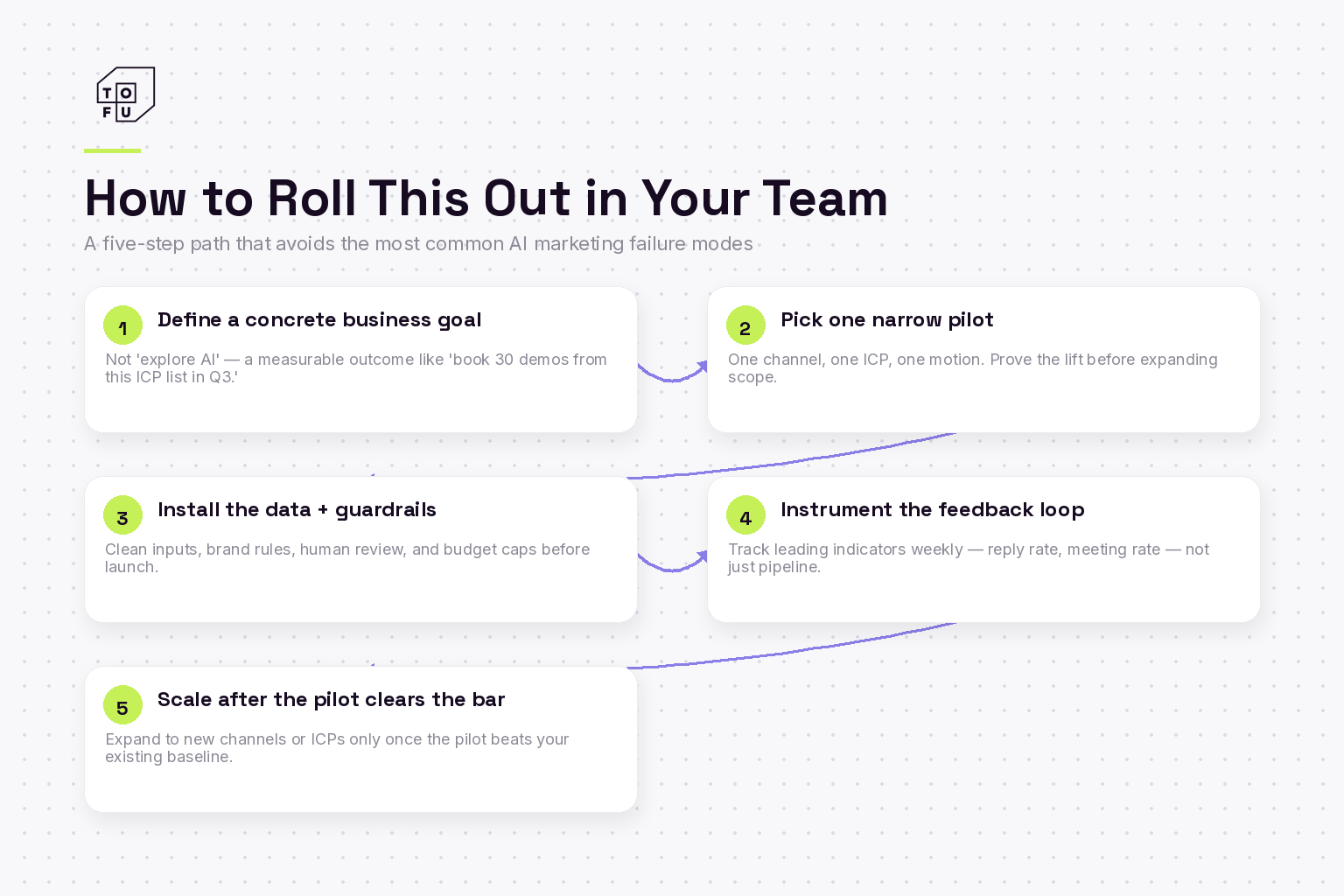
Building an effective sales acceleration stack requires matching tools to your primary bottleneck. Most B2B organizations do not need all 12 tools on this list — they need 3-5 tools that address their specific challenges. Here is a decision framework based on where your pipeline is losing velocity:
If your reps are not reaching enough of the right accounts: Start with a data and intent layer. Apollo.io provides an all-in-one prospecting and engagement platform at accessible pricing. 6sense adds buyer intent intelligence for organizations ready to invest in account-based prioritization. The combination of accurate contact data and intent signals ensures reps spend time on accounts that are actually in-market.
If your outbound engagement is inconsistent or unscalable: Invest in a sales engagement platform. Outreach and Salesloft are the two market leaders, and both now include meaningful AI capabilities. Choose Outreach if you prioritize sequence depth and analytics maturity. Choose Salesloft if you want a broader platform that includes Drift chatbots, conversation intelligence, and AI email agents in a single contract. Apollo works for teams that need engagement and data combined at a lower price point.
If your team needs coaching and conversation analysis: Gong is the strongest option for organizations where calls and meetings drive deal progression. Chorus is a compelling alternative if you are already invested in ZoomInfo for data. Both platforms surface coaching insights that improve rep performance over time — but only if management actively uses the coaching features. Conversation intelligence tools that are purchased but not operationalized deliver minimal value.
If your forecast accuracy and pipeline visibility are poor: Clari and People.ai address this directly. Clari is the more focused forecasting platform, ideal for organizations where the CRO needs a single source of truth for pipeline and revenue projections. People.ai is stronger on activity capture and account engagement analytics, particularly useful for organizations running account-based selling motions where stakeholder coverage matters.
If your sales content is generic and underperforming: Two approaches exist. Highspot and Seismic manage and distribute existing content with AI-powered recommendations — ideal for organizations that already have large content libraries and need better delivery and analytics. Tofu generates new personalized content at scale — ideal for organizations where the bottleneck is not content distribution but content creation. Many enterprise teams deploy both: Tofu generates account-personalized assets, and Highspot or Seismic manages, distributes, and tracks how reps use them.
If inbound leads are converting too slowly: Drift (now part of Salesloft) addresses speed-to-lead for organizations with meaningful website traffic. AI chatbots qualify and route visitors in real time, eliminating the form-to-SDR delay that costs most B2B companies a significant percentage of their inbound pipeline.
Frequently Asked Questions
What are the best AI tools for B2B sales acceleration?
The best AI tools for B2B sales acceleration in 2026 span six functional categories. For sales engagement, Outreach and Salesloft are the market leaders, providing AI-optimized multi-channel sequencing. For conversation intelligence, Gong leads with the deepest call analysis and deal risk detection, while Chorus (ZoomInfo) offers strong capabilities bundled with B2B data. For revenue forecasting, Clari provides the most accurate AI-powered pipeline predictions, and People.ai delivers automated activity capture and account engagement analytics. For buyer intent, 6sense identifies in-market accounts using predictive AI models. For sales enablement, Highspot and Seismic manage content delivery with AI-powered recommendations. For personalized content generation, Tofu creates account-specific landing pages, emails, one-pagers, and collateral from a single campaign brief. Most high-performing B2B sales teams use 3-5 tools across these categories, selected based on their primary pipeline bottleneck.
How does AI accelerate the B2B sales cycle?
AI accelerates the B2B sales cycle at every stage. During prospecting, AI identifies in-market accounts using intent signals and prioritizes outreach based on predicted conversion likelihood (6sense, Apollo). During engagement, AI generates personalized emails and optimizes sequence timing to maximize response rates (Outreach, Salesloft). During discovery and qualification, AI chatbots qualify inbound visitors in real time and book meetings instantly (Drift). During deal progression, AI analyzes sales conversations to surface coaching opportunities and detect deal risks before they become visible in CRM data (Gong, Chorus). During proposal and closing, AI generates personalized collateral and tracks buyer engagement with shared documents (Tofu, Highspot, Seismic). Throughout the entire cycle, AI-powered forecasting provides revenue leaders with accurate pipeline predictions grounded in activity data rather than rep estimates (Clari, People.ai). The cumulative effect is a 15-20% reduction in sales cycle length and 10-15% improvement in close rates for organizations that deploy AI effectively across their revenue process.
What is the difference between sales engagement and sales enablement tools?
Sales engagement tools (Outreach, Salesloft, Apollo) manage the communication workflow between sales reps and buyers. They automate email sequences, phone cadences, LinkedIn outreach, and meeting scheduling. The core value is ensuring consistent, timely outreach across every account and opportunity. Sales enablement tools (Highspot, Seismic) manage the content, training, and coaching that help reps sell more effectively. They organize sales collateral, recommend the right content for each deal situation, track content engagement, and deliver training programs to improve rep skills. Engagement tools answer "how and when do we reach out?" Enablement tools answer "what do we say and share when we do?" Most enterprise B2B organizations use both categories — engagement platforms for execution and enablement platforms for content and coaching. The distinction is blurring as vendors expand: Salesloft now includes coaching, Gong has added engagement, and several enablement platforms are adding outreach capabilities.
How much do AI sales acceleration tools cost?
AI sales acceleration tool pricing varies significantly by category. Sales engagement platforms (Outreach, Salesloft) typically cost $100-$200 per user per month with minimum seat requirements. Conversation intelligence (Gong) runs $100-$150 per user per month. All-in-one platforms (Apollo) offer free tiers scaling to $119 per user per month. Revenue intelligence (Clari, People.ai) and buyer intent platforms (6sense) use enterprise pricing, typically starting at $50,000-$100,000 annually. Sales enablement (Highspot, Seismic) ranges from $40-$85 per user per month. Tofu offers custom pricing based on usage and account volume. A comprehensive enterprise stack typically totals $150,000-$500,000 annually depending on team size and tool selection.
Can AI replace sales reps in B2B selling?
AI is not replacing B2B sales reps — it is changing what reps spend their time on. In 2026, AI handles account research, initial outreach emails, CRM logging, meeting prep, and follow-up content. This shifts rep focus to activities humans do uniquely well: building buying committee relationships, navigating organizational dynamics, handling nuanced objections, and providing consultative expertise. The most successful organizations are not reducing headcount — they are increasing productivity per rep. AI-augmented reps handle larger books of business with more personalized engagement at each account. The roles most affected are primarily administrative SDR/BDR functions, which are evolving toward strategic, AI-assisted prospecting and qualification.
What sales acceleration tools work best together?
The most effective sales acceleration stacks combine tools across complementary categories. A proven enterprise combination is: 6sense for buyer intent and account prioritization, Outreach or Salesloft for multi-channel engagement execution, Gong for conversation intelligence and coaching, Clari for pipeline forecasting, and Tofu for personalized content generation — with Highspot or Seismic managing content delivery. For mid-market organizations with tighter budgets, a strong starting stack is: Apollo.io for data and engagement, Gong for conversation intelligence, and Tofu for personalized collateral. The key integration points matter: your engagement platform should feed activity data to your forecasting tool, your intent data should trigger engagement workflows, your conversation intelligence should inform your coaching and content strategy, and your content generation should deliver personalized assets through your enablement platform. Avoid building a stack where tools operate in silos — the acceleration value comes from data flowing between systems, not from any individual tool in isolation.
How do I measure ROI on sales acceleration tools?
Measuring ROI on sales acceleration tools requires tracking four categories of metrics before and after deployment. Velocity metrics measure how fast deals move: average sales cycle length, time from MQL to SQL, time from first meeting to proposal, and time from proposal to close. Effective sales acceleration tools should compress these timelines measurably — a 10-20% reduction in cycle length is a realistic benchmark. Productivity metrics measure rep output: meetings booked per rep per week, qualified opportunities created per rep, and accounts actively worked per rep. AI tools typically increase per-rep productivity by 20-40%. Conversion metrics track pipeline quality: MQL-to-SQL conversion rate, SQL-to-opportunity rate, and opportunity-to-close rate. Improvements here indicate that the AI is helping reps focus on better accounts and have more effective conversations. Revenue metrics tie it all together: pipeline generated, revenue closed, average deal size, and forecast accuracy. The most rigorous approach compares cohorts — teams or territories using the new tools versus those that are not — to isolate the tool's impact from other variables like market conditions or territory quality.
Start Accelerating Your Sales Pipeline
If your sales acceleration bottleneck is personalized content — the landing pages, emails, one-pagers, and collateral your team needs for each target account — Tofu generates all of it from a single campaign brief.
See how B2B teams are producing account-personalized sales content at scale, in minutes instead of weeks.
Book a DemoStay up to date with the latest marketing tips and tricks
Other articles in this category
Want to give tofu A try?
Request a custom demo to see how Tofu can supercharge your GTM efforts.
ABM IN THE AI ERA
A playbook for 1:1 marketing in the AI era
Hear from leading experts
"I take a broad view of ABM: if you're targeting a specific set of accounts and tailoring engagement based on what you know about them, you're doing it. But most teams are stuck in the old loop: Sales hands Marketing a list, Marketing runs ads, and any response is treated as intent."

"ABM has always been just good marketing. It starts with clarity on your ICP and ends with driving revenue. But the way we get from A to B has changed dramatically."
.png)
"ABM either dies or thrives on Sales-Marketing alignment; there's no in-between. When Marketing runs plays on specific accounts or contacts and Sales isn't doing complementary outreach, the whole thing falls short."
"In our research at 6sense, few marketers view ABM as critical to hitting revenue goals this year. But that's not because ABM doesn't work; it's because most teams haven't implemented it well."
"To me, ABM isn't a campaign; it's a go-to-market operating model. It starts with cross-functional planning: mapping revenue targets, territories, and board priorities."

"With AI, we can personalize not just by account, but by segment, by buying group, and even by individual. That level of precision just wasn't possible a few years ago."
%201%20(1).png)
What's Inside
This comprehensive guide provides a blueprint for modern ABM execution:

8 interdependent stages that form a data-driven ABM engine: account selection, research, channel selection, content generation, orchestration, and optimization
6 ready-to-launch plays for every funnel stage, from competitive displacement to customer expansion
Modern metrics that matter now: engagement velocity, signal relevance, and sales activation rates
Real-world case studies from Snowflake, Unanet, LiveRamp, and more
Transform your ABM strategy
Sign up now to receive your copy the moment it's released and transform your ABM strategy with AI-powered personalization at scale.
Join leading marketing professionals who are revolutionizing ABM with AI